

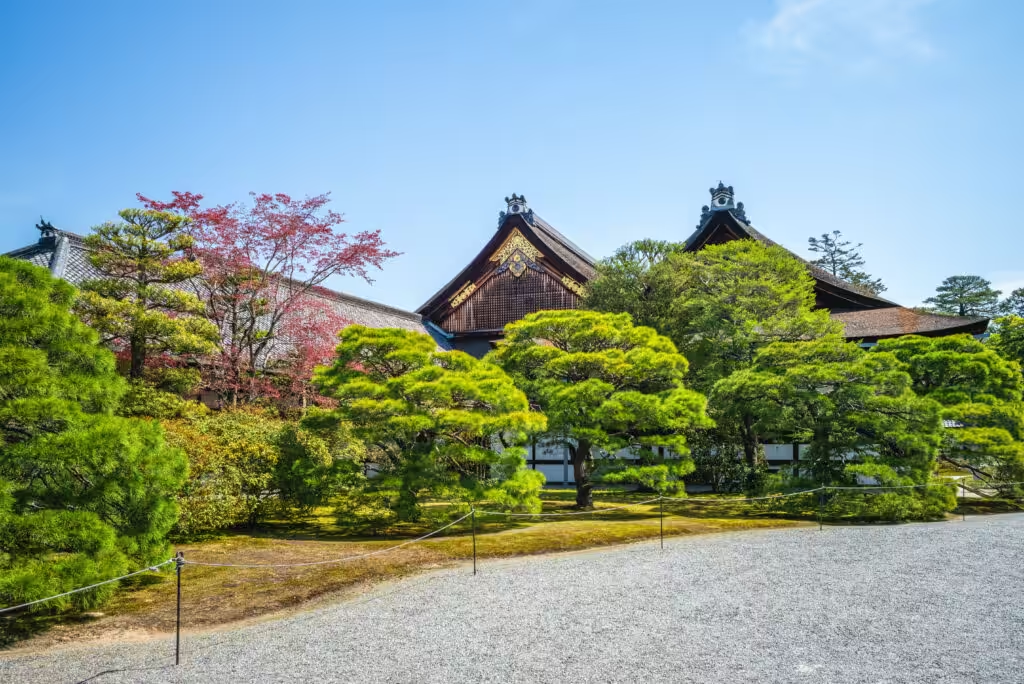
Step inside a place where Japanese history still resonates and experience the timeless beauty of traditional culture. The Kyoto Imperial Palace (Kyoto Gosho) served as the home of Japan’s emperors for nearly 1,100 years, ever since the nation’s capital was established in Heian-kyo in 794. Even after the imperial court relocated to Tokyo during the Meiji Restoration in 1868, this grand palace remained untouched, preserved with deep reverence as the spiritual heart of the Japanese monarchy. Since July 26, 2016, the palace has been open to the public on a year-round basis. It is completely free, offering visitors the rare chance to wander through its majestic architecture and peaceful gardens without needing reservations. For anyone dreaming of a trip to Kyoto, ESIMJAPAN.com has crafted a complete guide that takes you from the palace’s rich historical roots to all the practical tips you’ll need for a smooth and unforgettable visit.
Overview of the Imperial Palace in Kyoto Japan
The Role and Meaning of the Imperial Palace in Kyoto
The Imperial Palace in Kyoto is more than just a historic relic; it is a symbol of Japanese imperial culture and a center for Japan’s national identity. Even after Emperor Meiji relocated to Tokyo, no official decree was issued to designate the new capital, leading some residents in Kyoto to regard this palace as the true imperial palace.
Major Historical Significance
- 794 AD: Emperor Kanmu moved the capital to Heian-kyo (present-day Kyoto) and established the Imperial Palace
- 1100 AD: Served as the official residence of the emperor until the Meiji Restoration
- 1855 AD: Reconstruction of the current structures was completed after a major fire
- 1915 & 1928: Hosted the enthronement ceremonies of the Taisho and Showa emperors
- Today: It continues to serve as a site for imperial rituals and national ceremonies
Architectural Features and History by Era
Early Heian Period (794–1185)
The original palace complex in Heian-kyo was located about 2 kilometers west of the current site. Its architecture followed the Chinese Tang Dynasty style, featuring a grand south-facing layout and impressive scale. However, as the western part of the capital proved unsuitable due to marshy land, the city gradually shifted eastward, and the palace was relocated as well, resulting in a more compact design.
Kamakura to Edo Period (1185–1868)
The present Kyoto Imperial Palace grounds were originally the site of the Tōōmon Higashi-no-Tondono, a temporary residence. During the Northern and Southern Courts period (1336–1392), the Northern Court emperors resided here, elevating the location to the status of the official imperial palace. Later, Ashikaga Yoshimitsu of the Muromachi shogunate expanded the palace grounds further.
Current Structures (Reconstructed in 1855)
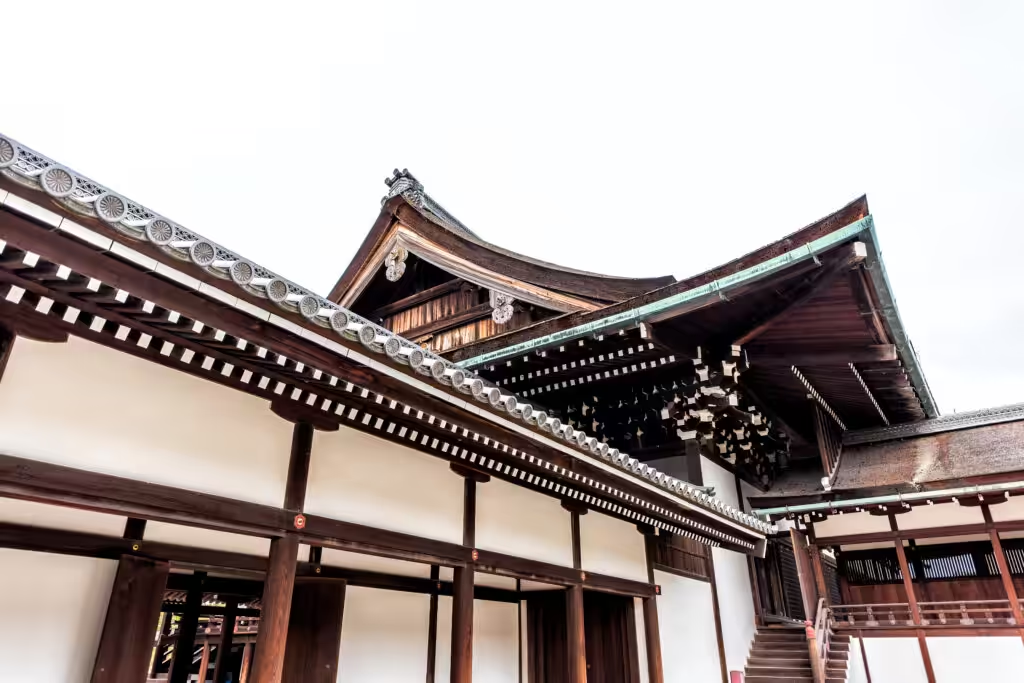
The buildings seen today were rebuilt in 1855 after a devastating fire. While faithfully preserving the aesthetic of the Heian-period palace, they also incorporate architectural techniques from the Edo period, showcasing the pinnacle of traditional Japanese craftsmanship.
Kyoto Imperial Palace Visitor Information
🕰️ Visiting Hours
The Kyoto Imperial Palace operates on a seasonal schedule, and visitors should note that entry closes 40 minutes before the official closing time. To fully enjoy your visit, it’s best to arrive with plenty of time left to spare.
Seasonal Hours
- April–August: 09:00–17:00 (last entry 16:20)
- March & September: 09:00–16:30 (last entry 15:50)
- October–February: 09:00–16:00 (last entry 15:20)
Closed Days
- Every Monday (If Monday is a national holiday, the palace closes on Tuesday instead)
- December 28 to January 4, the palace is closed to accommodate traditional New Year ceremonies and activities associated with the Imperial family.
- Temporary closures may occur during imperial events or due to severe weather conditions
🎫 Admission Fees & Free Areas
Admission to the Kyoto Imperial Palace is completely free of charge. After a simple security check at the entrance, visitors are free to explore the palace grounds at their own pace.
Free Guided Tours
- Languages: Japanese, English
- Duration: Approximately 50 minutes
- Start Times: 10:00 AM and 2:00 PM (times may vary)
- Reservation: Not required (First-come, first-served; participation may be limited if capacity is reached)
- Meeting Point: Visitor Room (to the right of the main entrance)
You can also download a free multilingual audio guide app to enjoy a self-guided tour with English narration.
(Other available languages are Korean, Chinese, Japanese, French, and Spanish)
✔️ Reservations: What You Need to Know
The Kyoto Imperial Palace has not required reservations for public visits since 2016. Simply proceed through the security check at the entrance, and you’re free to explore. However, a reservation is required to visit the Sento Imperial Palace, formerly the residence of retired emperors.
- Online reservation: Book through the Imperial Household agency’s official website, and reservations must be made at least 4 days in advance.
- Same-Day reservation: Available from 8:40 AM at the North Gate of Sento Imperial Palace. Limited to 70 people on a first-come, first-served basis, and the participants must be 18 years or older.
- Required documents: ID is required for entry. Additionally, it is noted that one reservation allows the main applicant to register up to 3 accompanying guests.
📌 Important Notes for your Visit
Prohibited items and activities are as follows:
- smoking, alcohol consumption, and also eating and drinking inside the palace grounds are not permitted
- loudspeakers or the use of sound amplifier devices
- Drones
- Hazardous or flammable items
- Pets (service dogs are allowed)
- Large luggage or oversized bags
Recommended Tips
- Wear comfortable shoes: Many paths are gravel, so sneakers are more comfortable than heels.
- Wheelchair rental available: Please inquire with the staff at the entrance if you need one.
- Photography: Allowed, but tripods and commercial photography equipment are prohibited.
How to Get to the Imperial Palace in Kyoto
Please note that parking is not available inside the palace grounds, so using public transportation is strongly recommended.
🚇 By Subway (Most Recommended)
The easiest and most convenient way to reach the palace is via the Kyoto Municipal Subway Karasuma Line.
- Imadegawa Station (Highly Recommended):
Use Exit 6 and walk about 5 minutes. This route brings you closest to the main entrance. - Marutamachi Station:
About a 10-minute walk to the palace grounds.
🚌 By Bus
You can use Kyoto city buses; however, please note that traffic jams may occur during peak hours.
- Bus No. 205: Get off at Furitsu Idai Byōin-mae stop, then walk 5 minutes to the palace.
- Bus Nos. 3, 4, 17, 37, 59, 205: Get off at Karasuma–Imadegawa stop, also about a 5-minute walk from the entrance.
⛩️ Main Entrance & Recommended Walking Route
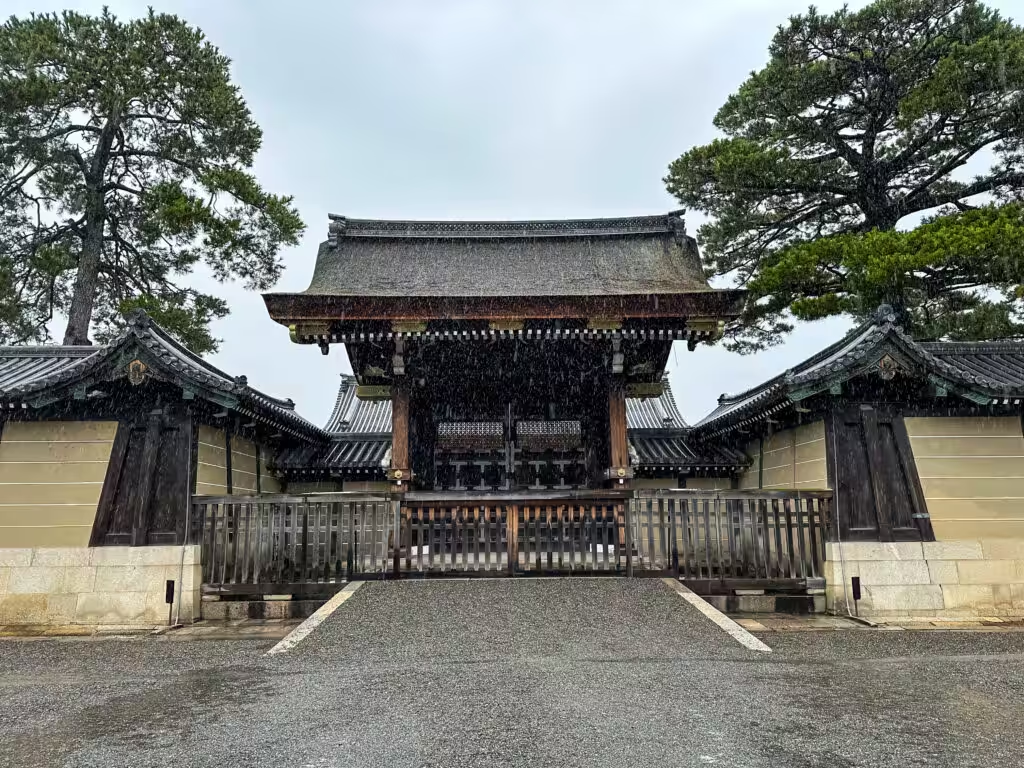
The Kyoto Imperial Palace has a designated entrance for visitors. The Seishōmon Gate, situated on the west side, serves as the main entrance for all visitors.
Recommended Walking Route
- Exit Imadegawa Station (Exit 6) and walk 50 meters north.
- Enter the North Gate of Kyoto Gyoen National Garden.
- Follow the gravel path straight south for about 300 meters.
- Arrive at Seishōmon Gate, proceed through the security check, and enter the palace grounds.
Kyoto Imperial Garden (Gyeon) and Surrounding Area
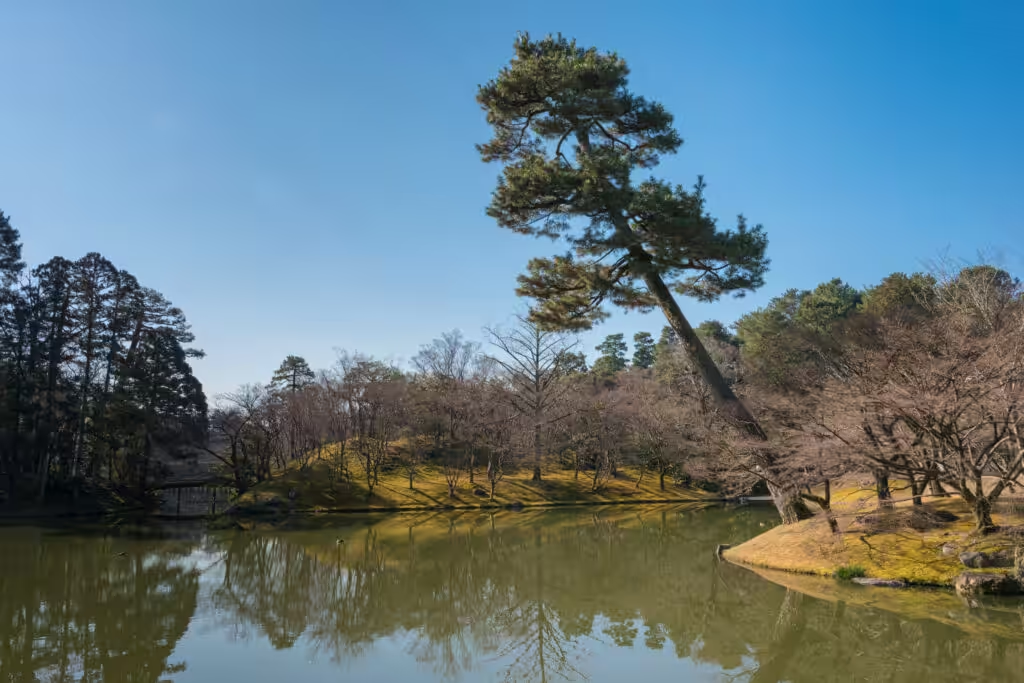
Introduction to Kyoto Gyoen Park
Kyoto Gyoen is a vast national park that surrounds the Kyoto Imperial Palace, covering nearly 630,000 square meters, roughly the size of 13 Tokyo Domes. After Emperor Meiji relocated to Tokyo in 1868, the former residences of court nobles were cleared and reorganized. In 1949, the area was officially opened to the public as a national park. Within the park, you’ll find not only the Imperial Palace but also the Sento Imperial Palace and the Kyoto Omiya Imperial Residence. The park is filled with century-old trees, expansive lawns, and peaceful walking paths, making it a beloved retreat for locals and visitors alike. Kyoto Gyoen Park is open 24 hours a day, year-round, allowing you to enjoy its tranquility at any time of the year.
Sento Imperial Palace (Residence of Retired Emperors)
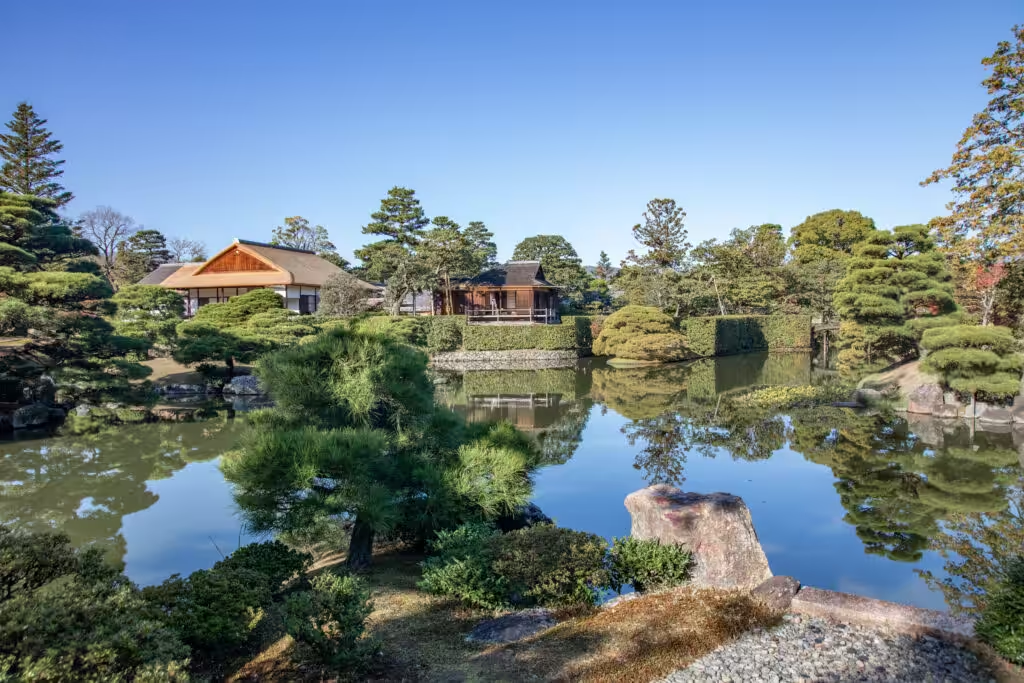
The Sento Imperial Palace, whose name conveys “the residence of a former sovereign,” was the home of Japan’s abdicated emperors. Its garden, designed by the renowned tea master Kobori Enshū, is considered one of the three most beautiful gardens in Japan, celebrated for its refined elegance and harmony with nature.
Highlights
- Konai-tei: A stunning garden that leads gracefully to the traditional teahouse
- Oike-niwa: A picturesque pond garden designed to look beautiful from every angle
- Kemari-no-niwa: A historic court garden once used for kemari, a traditional ball game played by nobles
Tips for Visiting Kyoto Imperial Palace
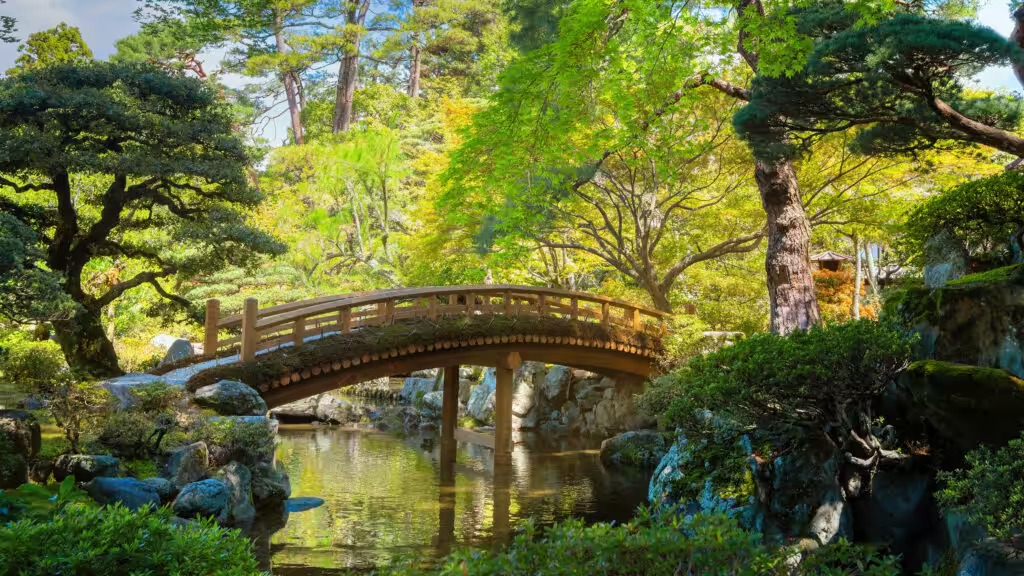
Must-See Photo Spots
- Shishinden Hall: The main ceremonial hall of the Kyoto Imperial Palace, where enthronement ceremonies and other major imperial rituals were held. Visit between 10:00 AM and 11:00 AM when sunlight hits the facade beautifully. For the best shot, photograph it from the Dantei, the white gravel courtyard in front.
- Kenreimon Gate: The grand south gate, reserved exclusively for the emperor and state guests. Capture the gate together with the sweeping gravel path for a powerful, symmetrical composition.
- Imperial Residence: The emperor’s former living quarters are admired for their refined Japanese architectural design. Look for details of wooden latticework and elegant rooflines.
- Oike-niwa Garden at Sento Imperial Palace: One of the most photogenic spots. From the bridge, capture the reflection of the buildings in the still pond, beautiful on clear days.
- Konoe Pond & Weeping Cherry Tree: One of the most beautiful locations, located in the northwestern part of Kyoto Gyoen Park. During spring, the sight of the weeping cherry blossoms reflected in the pond is nothing short of breathtaking.
Seasonal Highlights
- Spring (Late March-Mid April): Cherry blossoms blanket the entire area, with nearly 1,000 sakura trees blooming throughout Kyoto Gyoen. The weeping cherry tree by Konoe Pond is especially famous and makes a spectacular photo spot. It’s also a lovely time to enjoy a picnic on the lawns. From late February to mid-March, the ume (plum blossom) grove also bursts into color.
- Summer (June–August): The palace grounds are lush and vibrant with fresh greenery. To avoid the heat, consider visiting between 9:00 AM opening or after 4:00 PM, when it’s cooler and less crowded, perfect for relaxed photography.
- Autumn (Late October–Early December): Autumn foliage reaches its peak, painting Kyoto Gyoen and the Sento Imperial Palace in deep reds and golds. The contrast between the historic buildings and fiery leaves makes this one of Kyoto’s most beautiful fall destinations.
- Winter (December–February): A snow-covered palace creates a serene and majestic winter scene. Visit early in the morning, right after snowfall, to capture stunning contrasts between the white snow and the crimson palace structures.
Unmissable Kyoto: The Imperial Palace and Gyoen Park Await
The Kyoto Imperial Palace is a rare place where Japan’s history, culture, and natural beauty come together in perfect harmony. With free admission and breathtaking scenery that changes with every season, it offers an unforgettable experience for travelers of all kinds.
If you’re planning a trip to Kyoto, make sure to include the Kyoto Imperial Palace and Kyoto Gyoen Park in your itinerary; you won’t regret it. And if time allows, secure a reservation for Sento Imperial Palace to immerse yourself in one of Japan’s most exquisite gardens.
For a seamless journey from the moment you land, ESIMJAPAN.com is here to keep you connected, informed, and ready to explore every corner of Kyoto with ease. Enjoy your trip and embrace the timeless beauty of Japan’s imperial heart.


Leave a Reply