

Japan eSIM Field Performance
Weekly Report
Expert Summary
“Network Performance Observations Amid Regional Load Variance and Throughput Fluctuations”
Field measurements for March W3 show clear differences in network performance depending on location and usage conditions. Strong performance was observed in urban cores and certain transit systems, while reduced speeds and higher latency were recorded in high-density tourist areas.
High-Speed Mobility (Weekly Insight): Performance varies depending on trackside infrastructure. The Tsukuba Express recorded a download speed of 493 Mbps, while the Shinkansen recorded 11.2 Mbps with higher latency (1,567 ms). These results indicate that network performance is influenced more by infrastructure and handover conditions than by vehicle speed alone.
Landmark & Gateway Congestion: High-density locations showed reduced performance during the test period. Kyoto’s Kiyomizu-dera recorded very low throughput (0.1 Mbps) and high latency (6,639 ms), suggesting network congestion under heavy tourist traffic. Narita Airport recorded an average download speed of 13.5 Mbps, indicating limited capacity under peak load conditions.
Urban Core & Indoor Performance: Outside of congested areas, the network maintained strong performance. Peak download speeds reached 686.8 Mbps in indoor locations such as Tokyo hotels. The native eSIM profile routes traffic within the local network, which may contribute to more stable performance compared to roaming scenarios.
Technical Observation: The native local profile maintained consistent session continuity across test environments. While performance varied depending on physical conditions such as crowd density and signal obstruction, the connection remained stable without interruption during the measurement period.
Weekly eSIM Performance Index
Download performance
Seamless
Upload performance
Seamless
7-day trend
Overall status
Seamless
Temporal delay under heavy upload
Overall stability
High
Usage readiness
Routing behavior
Native-dominant
Traffic primarily handled within local network paths
Categorized Performance Analysis
This section analyzes connectivity at high-traffic entry points and key transit nodes that support regional mobility.
Airports
Analysis
Measurements across Narita terminals show reduced network performance during the test period. The average download speed was 13.5 Mbps, with latency increasing up to 3,315 ms, indicating congestion under high traffic conditions.
Summary
Users may experience delays when downloading large files or offline maps upon arrival. Basic activities such as messaging remain available, although responsiveness may be slower under heavy load.
| Location | Status | Speed | Responsiveness | |||
|---|---|---|---|---|---|---|
|
Speed Download (Mbps) |
Speed Upload (Mbps) |
Idle (ms) |
Download (ms) |
Upload (ms) |
||
| Narita Airport | Limited | 21.3 | 0.8 | 47.0 | 1340 | 1902 |
| Narita
Airport (Terminal 3) |
Limited | 13.8 | 8.3 | 47.0 | 1120 | 408 |
| Narita
Airport (Terminal 2) |
Limited | 5.4 | 6.3 | 44.0 | 3315 | 617.0 |
| Average | Limited | 13.5 | 5.1 | 43.7 | 1925 | 975.7 |
Tourist Landmark
Analysis
Measurements at high-density landmarks such as Kiyomizu-dera show significantly reduced network performance. Download speeds dropped to 0.1 Mbps, with latency reaching 6,639 ms, indicating severe congestion under peak tourist conditions.
Summary
In major sightseeing areas, data performance may be limited, particularly for bandwidth-intensive tasks. While locations such as Shibuya (120 Mbps) maintained stable performance, certain tourist sites in Kyoto showed reduced throughput during the test period.
💡 Users are advised to download maps, tickets, and essential content in advance before entering high-congestion areas.
| Location | Status | Speed | Responsiveness | |||
|---|---|---|---|---|---|---|
| Speed
Download (Mbps) |
Speed
Upload (Mbps) |
Idle (ms) |
Download (ms) |
Upload (ms) |
||
| Tokyo Dome | Stable | 42.8 | 18.3 | 56.0 | 802.0 | 52.0 |
| Hachiko Square, Shibuya | Seamless | 120.0 | 2.7 | 14.0 | 475.0 | 925.0 |
|
Kiyomizu-dera (test 1) |
Limited | 0.1 | 0.2 | 39.0 | 6639.0 | 2625.0 |
|
Kiyomizu-dera (test 2) |
Limited | 3.3 | 4.5 | 45.0 | 1627.0 | 940.0 |
| Average | stable | 228.30 | 36.90 | 100.67 | 522.33 | 385.33 |
Urban Core & Indoor
Analysis
Measurements outside high-density tourist areas show consistently strong network performance. The average download speed reached 456.7 Mbps, with peak speeds up to 686.8 Mbps in indoor locations such as Tokyo hotels. These results indicate stable performance in urban environments under normal network load conditions.
Summary
In urban areas, the network supports high-bandwidth activities such as video streaming and video calls. Performance remained consistent across both indoor and outdoor locations in Tokyo and Osaka.
💡 Users can expect stable connectivity for work and general data usage when outside congested areas.
| Location | Status | Speed | Responsiveness | |||
|---|---|---|---|---|---|---|
| Speed
Download (Mbps) |
Speed
Upload (Mbps) |
Idle (ms) |
Download (ms) |
Upload (ms) |
||
| Nishi Ward, Osaka | Stable | 320.0 | 22.1 | 38.0 | 235.0 | 183.0 |
| Itabashi City | Seamless | 245.0 | 31.5 | 16.0 | 623.0 | 210.0 |
| Awajicho Station | Stable | 575.0 | 15.9 | 22.0 | 303.0 | 68.0 |
| Tokyo Hotel | Stable | 686.8 | 106.2 | 38.0 | 363.0 | 105.0 |
| Average | Seamless | 456.7 | 43.9 | 28.5 | 381.0 | 141.5 |
💡 Weekly Insight
eSIM Performance Across Transit Modes in Japan
Q. Does higher travel speed always lead to lower eSIM performance?
A. While the Tsukuba Express (TX) recorded speeds of 493 Mbps, the Shinkansen recorded 11.2 Mbps, indicating that network performance depends more on trackside infrastructure than vehicle speed alone.
Field Observation
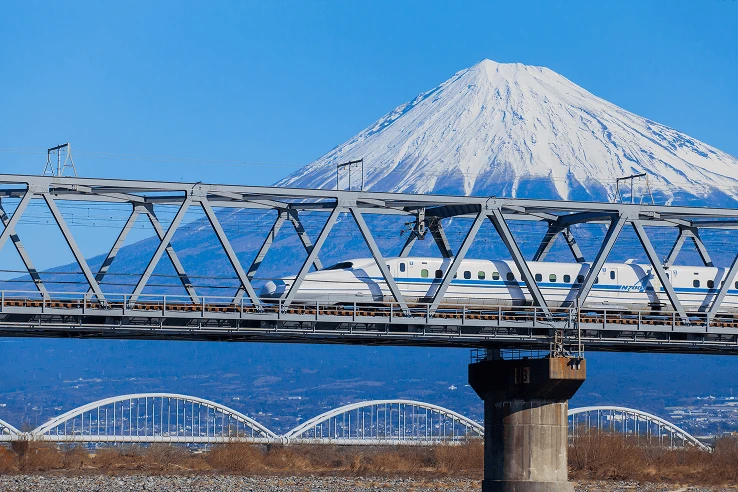
Japan Shinkansen
Test Condition
A field test was conducted to evaluate network performance under high-density transit conditions.
- Scenarios: Measurements were collected across multiple transit environments while in motion.
- Vehicles: Tsukuba Express* (regional high-speed), Shinkansen* (high-speed rail), Narita Express* (airport express), and a Kyoto city bus.
- Environmental Factors: High-speed mobility (Doppler effect), signal attenuation from train structures, and frequent handovers between base stations.
- Device Configuration: KDDI au native local eSIM profile on 5G
* Express: A regional high-speed line connecting Tokyo and Tsukuba, with relatively stable high-speed network conditions along the route.
*Shinkansen: A nationwide high-speed rail system operating at very high velocities, characterized by frequent handovers between base stations.
*Narita Express: An airport express line linking Narita Airport and central Tokyo, providing consistent connectivity across intercity segments.
Result
The data shows a clear performance difference between regional commuter lines and long-distance high-speed rail, which may affect how users manage connectivity while traveling.
Tsukuba Express & NEX (Regional Transit): These lines recorded high performance, with the Tsukuba Express reaching 493 Mbps and the Narita Express reaching 166.2 Mbps. → This level of performance supports high-bandwidth activities such as video streaming and file downloads during transit.
Shinkansen (High-Speed Rail): In contrast, the Shinkansen recorded 11.2 Mbps download / 2.1 Mbps upload, with higher latency (1,567 ms). → Performance remains sufficient for basic messaging and browsing, but may be limited for real-time applications such as video calls or cloud-based tasks.
Surface-level transit recorded stable performance at 68.7 Mbps. → This supports consistent usage for navigation and real-time updates while moving within the city.
Test Video
Test on TX train
Test Result
| location | Status | Speed | Responsiveness | |||
|---|---|---|---|---|---|---|
|
Download (Mbps) |
Upload (Mbps) |
Idle (ms) |
Download (ms) |
Upload (ms) |
||
| Tokyo Subway (Keio Inokashira Line) | Stable | 65.8 | 10.8 | 29 | 518 | 40 |
| TX Train | Seamless | 493.0 | 101.0 | 21.0 | 314.0 | 86.0 |
| NEX Train (Airport → Tokyo) | Seamless | 166.2 | 101.0 | 76.0 | 667.0 | 640.0 |
| NEX Train (Tokyo → Airport) | Seamless | 116.3 | 5.4 | 30.0 | 447.0 | 718.0 |
🛠️ Technical Notes: The “Native” Advantage
The performance differences observed across transit modes are primarily associated with variations in trackside infrastructure and physical signal conditions.
Optimized Path Relay Systems
The high throughput observed on the Tsukuba Express (493 Mbps) is likely associated with the use of trackside 5G/LTE relay infrastructure. These systems help mitigate frequency instability caused by high-speed movement (Doppler effect), allowing devices to maintain more stable connections on higher-frequency bands.
Handover Overhead Under High-Speed Conditions
The elevated latency observed on the Shinkansen (1,567 ms) is consistent with frequent cell handovers at high velocity. As devices transition rapidly between base stations, additional signaling and resource allocation are required to maintain the connection, which may increase latency during data transmission.
Signal Attenuation in Enclosed Environments
The lower upload speeds (2.1 Mbps) observed in high-speed trains may be influenced by signal attenuation caused by the metallic structure of train cars. This shielding effect can reduce uplink transmission efficiency from user devices. Despite these constraints, the connection remained active throughout the measurement period, indicating stable session continuity under reduced signal conditions.
2026 Japan Sakura Connectivity Report
The cherry blossoms are coming, and so is the crowd.Our specialized field data reveals which sakura hotspots offer the strongest eSIM signals.
Lab Verdict & Recommendations
Based on measurements collected during the third week of March (Mar 14–20, 2026):
• Performance Variation: eSIM performance in Japan varies by location, with speeds
exceeding 600 Mbps in urban areas and dropping to 0.1 Mbps in crowded tourist sites such as
Kiyomizu-dera.
→ Travelers should download maps and essential data before entering high-density areas.
• Transit Conditions: While commuter lines recorded speeds up to 493 Mbps,
high-speed rail dropped to 11.2 Mbps, suggesting that connectivity depends more on infrastructure than
travel speed.
→ Data-heavy tasks are more reliable on commuter lines or stationary locations.
• Connection Stability: Even in congested environments such as airports and indoor
locations, the connection remained available for basic usage.
→ Users can expect messaging and navigation to remain functional under most conditions.
Scope Note
This report reflects field measurements collected across selected transit and urban test locations during the reporting period. Tests were conducted using multiple devices under comparable network conditions. Results may vary depending on device specifications, signal environment, and real-time network traffic.
Stay Connected Reliably in Japan
📊 Appendix: Full Field Connectivity Dataset
This appendix presents the complete dataset, representing connectivity health across major hubs during the third week of March.
| Date | Lacation | Speed | Responsiveness | |||
|---|---|---|---|---|---|---|
| Speed
Download (Mbps) |
Speed
Upload (Mbps) |
Idle (ms) |
Download (ms) |
Upload (ms) |
||
|
SAT
03/14/2026
|
Nerima Station | 🔴 21.2 | 🟢 40.1 | 🟢 33.0 | 🔴 808.0 | 🟢 35.0 |
| Narita Airport (Terminal 3) | 🔴 13.8 | 🔴 8.3 | 🟢 40.0 | 🔴 1120.0 | 🔴 408.0 | |
| Narita Airport (Terminal 2) | 🔴 5.4 | 🔴 6.3 | 🟠 44.0 | 🔴 3315.0 | 🔴 617.0 | |
| Narita Express Train (Airport to Tokyo) | 🟢 166.2 | 🟠 16.8 | 🟠 76.0 | 🔴 667.0 | 🔴 640.0 | |
| Shibuya (Indoor) | 🟠 32.7 | 🔴 0.6 | 🟢 35.0 | 🔴 997.0 | 🔴 2726.0 | |
|
SUN
03/15/2026
|
Yoyogi Park | 🟢 179.0 | 🟢 44.0 | 🟢 19.0 | 🔴 257.0 | 🔴 169.0 |
| Ikebukuro Park | 🔴 27.0 | 🔴 3.4 | 🟠 49.0 | 🔴 1018.0 | 🟠 59.0 | |
| Nishi Ward, Osaka | 🟢 320.0 | 🟠 22.1 | 🟢 38.0 | 🔴 235.0 | 🔴 183.0 | |
| Itabashi City | 🟢 245.0 | 🟠 31.5 | 🟢 16.0 | 🔴 623.0 | 🔴 210.0 | |
| Awajicho Station | 🟢 575.0 | 🟠 15.9 | 🟢 22.0 | 🔴 303.0 | 🟠 68.0 | |
| Shinkansen Train | 🔴 11.2 | 🔴 2.1 | 🟠 41.0 | 🔴 1567.0 | 🔴 457.0 | |
| Kyoto | 🔴 1.4 | 🔴 12.8 | 🟢 35.0 | 🔴 2384.0 | 🔴 512.0 | |
|
MON
03/16/2026
|
Higashiosaka City | 🟠 49.2 | 🔴 3.6 | 🟠 54.0 | 🔴 872.0 | 🔴 695.0 |
| Takeshita Street | 🟠 99.9 | 🟢 43.8 | 🟢 39.0 | 🔴 330.0 | 🔴 401.0 | |
| Akihabara Station | 🟢 254.0 | 🟠 15.5 | 🟢 28.0 | 🔴 815.0 | 🔴 317.0 | |
| Kyoto Hotel | 🟠 35.0 | 🔴 5.3 | 🟢 39.0 | 🔴 470.0 | 🔴 743.0 | |
| Kyoto City Bus (Moving) | 🟠 68.7 | 🔴 9.2 | 🟢 30.0 | 🔴 815.0 | 🔴 120.0 | |
| Kiyomizu-dera Temple (Test 1) | 🔴 0.1 | 🔴 0.2 | 🟢 39.0 | 🔴 6639.0 | 🔴 2625.0 | |
| Kiyomizu-dera Temple (Test 2) | 🔴 3.3 | 🔴 4.5 | 🟠 45.0 | 🔴 1627.0 | 🔴 940.0 | |
|
TUE
03/17/2026
|
Higashiosaka City | 🟢 142.0 | 🔴 7.6 | 🟢 40.0 | 🔴 685.0 | 🔴 728.0 |
| Tokyo Dome | 🟠 42.8 | 🟠 18.3 | 🟠 56.0 | 🔴 802.0 | 🟠 52.0 | |
| Hachiko Square | 🟢 120.0 | 🔴 2.7 | 🟢 14.0 | 🔴 475.0 | 🔴 925.0 | |
| Tsukuba Express | 🟢 493.0 | 🟢 101.0 | 🟢 21.0 | 🔴 314.0 | 🔴 86.0 | |
|
WED
03/18/2026
|
Higashiosaka City | 🟠 87.0 | 🔴 2.8 | 🟢 31.0 | 🔴 778.0 | 🔴 730.0 |
| Narita Airport | 🔴 21.3 | 🔴 0.8 | 🟠 47.0 | 🔴 1340.0 | 🔴 1902.0 | |
| Tokyo Hotel | 🟢 686.8 | 🟢 106.2 | 🟢 38.0 | 🔴 363.0 | 🔴 105.0 | |
| Narita Express Train (Tokyo to Airport) | 🟢 116.3 | 🔴 5.4 | 🟢 30.0 | 🔴 447.0 | 🔴 718.0 | |
| Ikebukuro Station | 🟠 44.3 | 🔴 3.7 | 🟠 57.0 | 🔴 418.0 | 🔴 605.0 | |
|
THU
03/19/2026
|
Shin Okubo | 🟠 43.5 | 🟠 25.7 | 🟢 32.0 | 🔴 905.0 | 🟢 33.0 |
|
FRI
03/20/2026
|
No data collected | |||||

Director of Connectivity Lab
Ian Hyukjong Yeo
"Empowering journeys with easy, reliable, and convenient traveler eSIM solutions"
Ian Hyukjong Yeo is the Director of Connectivity Lab and a telecommunications entrepreneur with over 20 years of experience in the global telecom industry. Today, he leads Connectivity Lab's research and field benchmarking initiatives evaluating real-world eSIM performance for international travelers.