

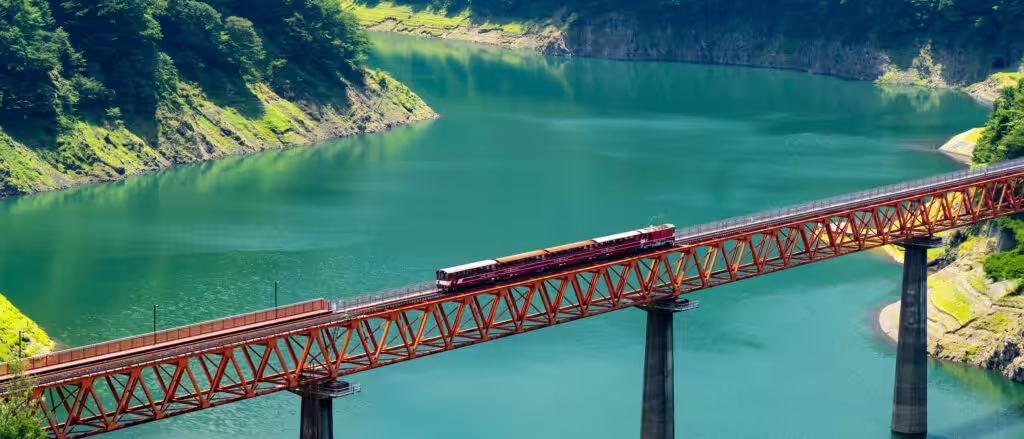
Among the best ways to travel in Japan, the Japan Rail system stands out as the most convenient choice for travelers. Operated by private companies, Japan’s railways are globally renowned for their punctuality, safety, and convenience. The system is also designed to be accessible, making it easy even for first-time users to navigate with confidence.
Today, with ESIMJAPAN.com, we will take a detailed look at everything you need to know for traveling by train in Japan, from the structure of the railway system to purchasing train tickets and useful tips for navigating stations.
Japan Railway System
Before you start your journey, let’s begin by understanding Japan’s railway system.
Overview of Japan’s Railway Operators
Following the privatization of the former national railway (JNR), Japan’s railways were divided into seven JR Group companies in 1987. Each company operates by region, and although they are legally separate entities, they all share the same common “JR” brand. Surprisingly, the “JR” you often see on trains isn’t just a logo, it’s the actual name of the company operating them.
The 6 JR Passenger Railway Companies
| Company Name | Region of Operation | Major Lines/ Key Cities |
|---|---|---|
| JR Hokkaido | Hokkaido | Sapporo, Hakodate, Asahikawa |
| JR East (JR East Japan) | Kanto / Tohoku | Tokyo, Sendai, Niigata, Nagano |
| JR Central (JR Tokai) | Chubu | Nagoya, Shizuoka, Tokaido Shinkansen |
| JR West | Kansai / Chugoku | Osaka, Kyoto, Hiroshima |
| JR Shikoku | Shikoku | Takamatsu, Matsuyama |
| JR Kyushu | Kyushu | Fukuoka, Nagasaki, Kagoshima |
As of 1996, Japan’s total railway length was 27,268 km, and approximately 73.8% of that, or 20,135 km, was operated by the seven JR companies.
Major Private Railways
In addition to JR, 16 major private railway companies operate mainly in the Kanto and Kansai regions:
- Kanto: Tobu Railway, Seibu Railway, Keisei Electric Railway, Keio Corporation, Odakyu Electric Railway, Tokyu Corporation, Keikyu Corporation
- Chubu: Nagoya Railroad (Meitetsu)
- Kansai: Kintetsu Railway, Nankai Electric Railway, Keihan Electric Railway, Hankyu Railway, Hanshin Electric Railway
- Kyushu: Western Japan Railway (Nishitetsu)
Types of Trains (Shinkansen, Limited Express, Express, Local Trains & Special Trains)
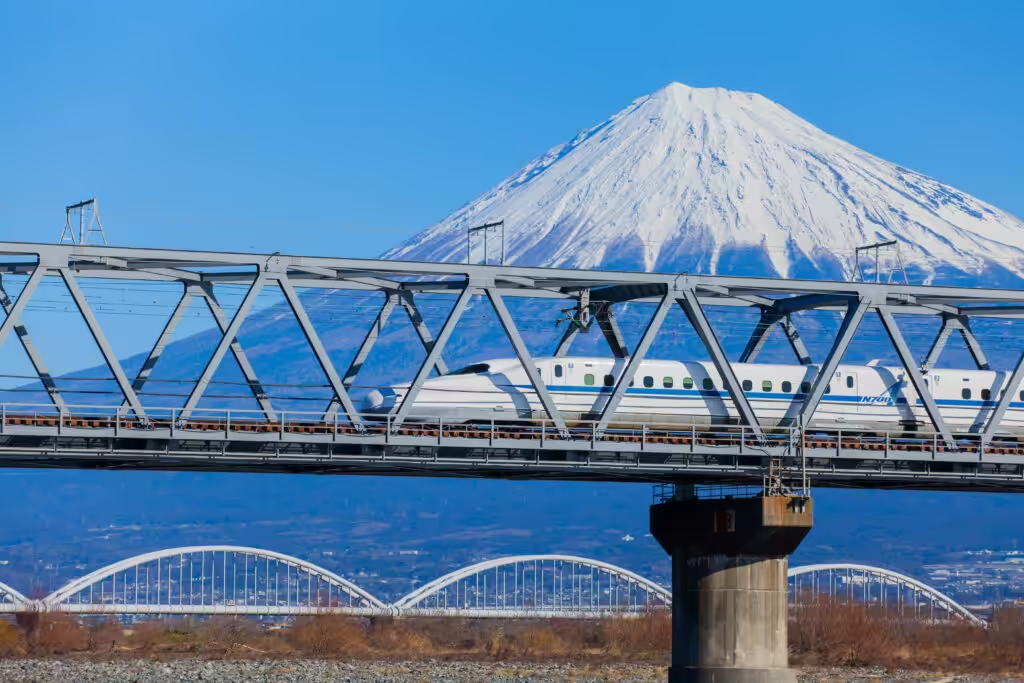
Japan Rail trains are categorized into several types depending on their speed and the number of stops they make.
1. Shinkansen- High Speed Trains
Japan’s high-speed rail system, the Shinkansen, was launched in preparation for the 1964 Tokyo Olympics. The trains now run at a maximum speed of 260-320 km/h.
Major Shinkansen Lines:
- Tokaido Shinkansen: Tokyo – Shin-Osaka (515.4 km)
- Sanyo Shinkansen: Shin-Osaka – Hakata
- Tohoku Shinkansen: Tokyo – Shin-Aomori
- Hokuriku Shinkansen: Tokyo – Kanazawa – Tsuruga
- Kyushu Shinkansen: Hakata – Kagoshima-Chuo
Shinkansen service types by speed:
- Nozomi / Mizuho: Fastest, with the fewest stops
- Hikari / Sakura: Semi-fast trains that stop at key stations
- Kodama / Tsubame: Local-type Shinkansen that stops at all stations
2. Limited Express
These are the fast long-distance trains that connect major cities and popular tourist destinations. Some of the JR Limited Express trains are:
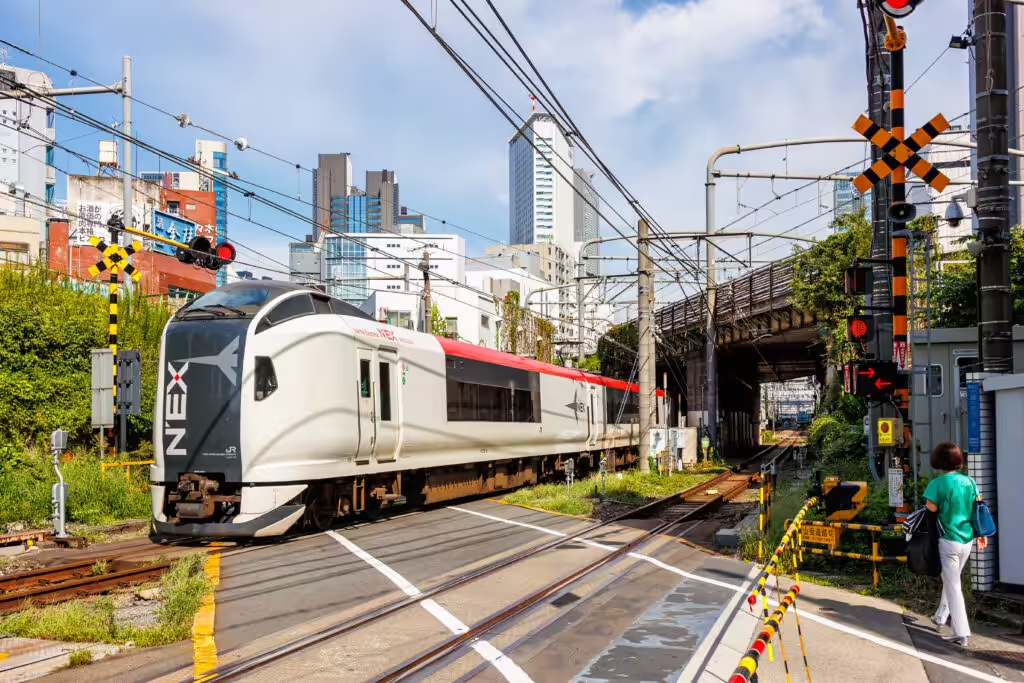
- Narita Express (N’EX): Narita Airport → Central Tokyo
- Haruka: Kansai Airport → Kyoto / Osaka
- Thunderbird: Osaka → Kanazawa
3. Express
Slower than Limited Express trains but faster than regular trains, making them suitable for medium-distance travel.
4. Rapid/ Semi-Express
Commuter trains for mid-distance travel that skip certain stations.
5. Local Trains
These trains stop at every station and are the slowest, but they are more economical since no additional charges are applied.
6. Tourist Special Trains
Across Japan, various themed, uniquely designed sightseeing trains operate, offering special experiences and scenic journeys.
- Train Suite Shiki-shima: JR East’s ultra–luxury sightseeing train
- Seven Stars in Kyushu: JR Kyushu’s premium cruise-style train
- Torokko Train: A scenic sightseeing train that runs through picturesque valleys
How to Choose the Right Japan Rail Train for Your Trip
Choosing the right Japan rail train for your travel purpose can make your travel far more efficient.
Long-distance travel (Shinkansen, Express)
Moving from Tokyo to big cities like Osaka
The Shinkansen is Japan’s high-speed rail network, connecting major regions nationwide. Since its operation in 1964, it has been in operation for over 60 years without a single passenger fatality caused by train operation, showcasing its exceptional safety records.
- Distance: Tokyo–Osaka, approximately 550 km
- Travel Time: Nozomi — about 2 hours 30 minutes
- Fare: Around 14,000 yen, which is approximately $90 (for non-reserved seats)
- Features: Operates at speeds of up to 285 km/h, with more than 10 trains running per hour
Airport to City Center
Limited Express trains are the most convenient option:
- Narita Express (N’EX): Narita Airport → Tokyo Station / Shinjuku Station (Approx. 60 min, $20)
- Haruka: Kansai Airport → Kyoto (Approx. 75 min, $23)
- Skyliner: Narita Airport → Ueno Station / Nippori Station (Approx. 40 min, $16)
Access to Regional Tourist Destinations
- Nagano: Take the Hokuriku Shinkansen from Tokyo. The journey takes about 1 hour and 30 minutes.
- Kanazawa: Take the Hokuriku Shinkansen from Tokyo, and the trip takes about 2 hours and 30 minutes.
- Hiroshima: From Osaka, take the Sanyo Shinkansen, and the ride takes about 1 hour and 30 minutes.
Local & Suburban Travel (Express/Local Trains)
Day trip near Tokyo
- Nikko: From Asakusa, take the Tobu Limited Express to Nikko; the journey takes about 2 hours and costs around $13
- Hakone: From Shinjuku, board the Odakyu Romancecar to Hakone, a scenic 85-minute ride costing around $13
- Kamakura: From Tokyo, take the JR Yokosuka Line local train to Kamakura; it takes about 1 hour and costs roughly $6
Kansai Region Travel
JR local trains or private railways are more than sufficient.
- Osaka ↔ Kyoto: JR Rapid, approx. 30 min, approx $4
- Kyoto ↔ Nara: JR Nara Line Local, approx. 45 min, approx $5
- Osaka ↔ Kobe: JR Rapid, approx. 20 min, approx $3
City Travel (Subway & Local Railways)
Getting around Tokyo
Tokyo’s subway system consists of 13 lines, divided into 4 Toei Subway lines and 9 Tokyo Metro lines.
Major lines:
- Yamanote Line (JR): A loop line connecting all major areas of Tokyo
- Ginza Line (Tokyo Metro): Shibuya → Asakusa
- Hibiya Line (Tokyo Metro): Naka-Meguro → Kita-Senju
- Chuo Line (JR): Tokyo → Tachikawa, Shinjuku → Mitaka
Getting around Osaka
Osaka’s subway system consists of 8 lines covering the entire Osaka city area.
Major lines:
- Osaka Metro: Connects downtown Osaka with 9 routes
- Midosuji Line: Osaka’s main north–south line (Shin-Osaka → Namba → Tennoji)
- Hankyu / Hanshin Railways: Connect Osaka with Kobe and Kyoto
Types of Train Tickets and Rail Passes in Japan
It is important to choose the ticket or pass that best suits your travel needs to save money when traveling by train in Japan.
Japan Rail Pass (JRP)
The Japan Rail Pass is a jointly offered pass by the six JR Group companies, providing an economical and convenient ticket ideal for traveling across Japan by rail.
Types and Prices (As of 2025)
| Type | 7-Day pass | 14-Day pass | 21-Day pass |
|---|---|---|---|
| Ordinary (Standard Class) | 50,000 yen approx. $320 | 80,000 yen approx. $512 | 100,000 yen approx. $640 |
| Green Car (First Class) | 68,000 yen approx. $435 | 110,000 yen approx. $700 | 140,000 yen approx. $900 |
| Children (Ages 6-11) | 50% of adult fare | 50% of adult fare | 50% of adult fare |
Areas covered under the Japan Rail Pass
- All JR-operated Shinkansen lines (excluding Nozomi and Mizuho)
- Limited Express, Express, and Local JR trains
- JR Buses (selected routes only)
- JR Ferry (Miyajima route)
Eligibility for purchasing JRP
- Foreign visitors entering Japan for short-term stays
- Japanese nationals residing overseas (must provide proof of living abroad for 10+ years)
How to purchase
- Online (most convenient): Purchase through the official website
- After arriving in Japan: Exchange at major airports or JR stations
Regional JR Pass
If you plan to travel within a specific region rather than across the entire country, regional passes offer a more cost-effective option.
| Pass Name | Validity | Price | Coverage |
|---|---|---|---|
| JR Tokyo Wide Pass | 3 days | 15,000엔 approx.$95 | Entire Kanto region, Mt. Fuji area, Nikko, Karuizawa |
| Kansai Wide Pass | 5 days | 11,000엔 approx.$70 | Osaka, Kyoto, Nara, Kobe, Himeji, Wakayama |
| Hokkaido Rail Pass | 5 days/7 days | 20,000엔/24,000엔 approx.$130/$155 | Entire Hokkaido region |
| Kyushu Rail Pass | 3 days/5 days | 11,000엔/13,000엔 approx. $70/$85 | Entire Kyushu region |
Regular Train Ticket
Basic Fare Ticket (Joshaken)
- A ticket that covers only the base fare
- Price is calculated based on the distance traveled
- Allows boarding of non-reserved seats on local trains
Limited Express Ticket (Tokkyuken)
- Required when riding Shinkansen or Limited Express trains
- Must be purchased along with a basic fare ticket
- You can choose between reserved and non-reserved seats
example: Tokyo → Osaka (Shinkansen Nozomi)
- Basic Fare (unchin): 8,910 yen(approx. $57)
- Limited Express Ticket (reserved seat): 5,810 yen(approx. $37)
- Total: 14,720 yen (approx. $94)
IC Card
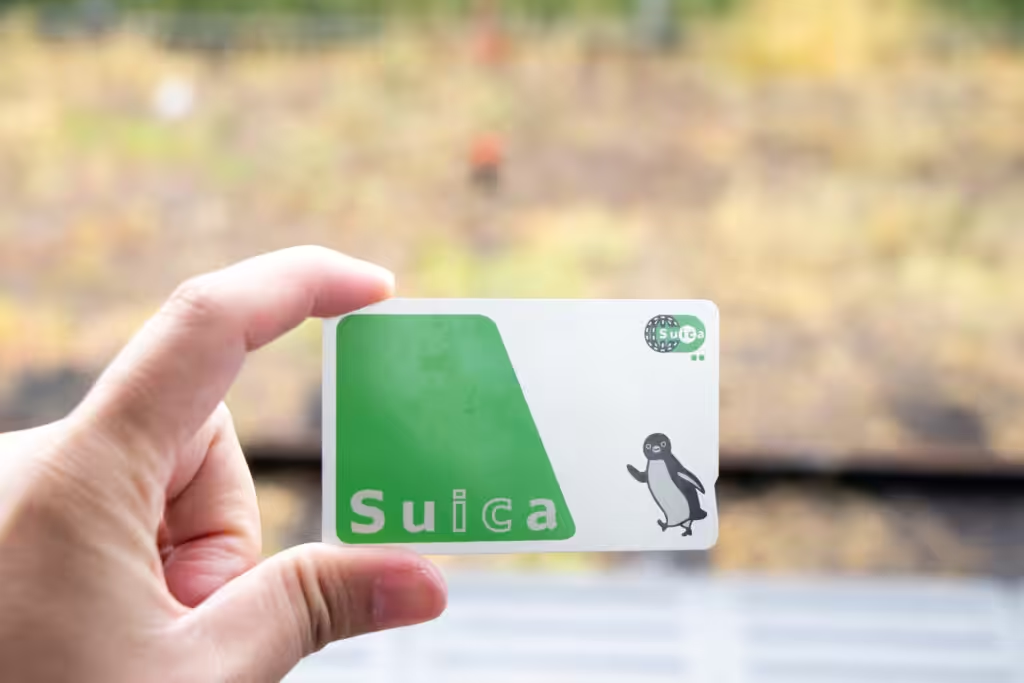
Since March 2025, sales of the non-registered Suica and PASMO cards have resumed, and they can now be used interchangeably throughout Japan.
Major IC Card Types
| IC Card | Issuing Company | Main Region |
|---|---|---|
| Suica | JR East | Tokyo, Tohoku, Hokkaido |
| PASMO | Private railways in Kanto | Tokyo, Greater Kanto area |
| ICOCA | JR West | Osaka, Kyoto, Kansai |
| Kitaca | JR Hokkaido | Sapporo, Hokkaido |
| TOICA | JR Central | Nagoya, Shizuoka |
| Manaca | Nagoya private railways | Nagoya city |
| SUGOCA | JR Kyushu | Fukuoka, Kyushu |
| Nimoca | Nishitetsu | Fukuoka |
| Hayakaken | Fukuoka City | Fukuoka Subway |
Welcome Suica (Traveler-Only IC Card)
“Welcome Suica” is an IC card designed exclusively for short-term foreign visitors. It can be used for 28 days without requiring a deposit, and you can choose a purchase amount ranging from 1,000 to 10,000 yen (approx. $6-65).
Features:
- Deposit: Not required (regular Suica requires a 500-yen deposit)
- Validity: 28 days
- Where to purchase: Narita Airport, Haneda Airport, and major stations
- Available amounts: 1,000 / 2,000 / 3,000 / 4,000 / 5,000 / 10,000 yen
- Can be kept as a souvenir after your trip
Mobile IC cards
With the release of the Welcome Suica Mobile app in March 2025, iPhone users can now issue and top up the card directly through the app.
- Mobile Suica/PASMO/ICOCA: Available on iPhone 8 or later, or Japan-model Android devices
- Top-up options: Apple Pay or credit card
- Advantages: No risk of losing a physical card, and convenient online charging anytime needed.
City Pass
Unlimited use passes within major cities:
- Tokyo Metro 24/48/72-Hour Pass: 800 / 1,200 / 1,500 yen
- Toei Bus One-Day Pass: 500 yen
- Osaka Amazing Pass: 3,500 yen (1 day), 5,000 yen (2 days)
- Unlimited subway & bus rides + free admission to major attractions
- Kyoto City Bus One-Day Pass: 700 yen
- Kyoto Subway & Bus One-Day Pass: 1,100 yen
Using Mobile Apps
Reservation Apps
- Ekinet (えきねっと): JR East reservation system
- Smart EX: Reservation system for the Tokaido & Sanyo Shinkansen
- e5489: JR West reservation system
Transit Guide Apps
- Google Maps: Supports Japanese / English / Korean
- NAVITIME: Detailed and accurate Japan transit information
- Japan Transit Planner: Designed specifically for foreign visitors
How to Purchase and Reserve Train Tickets
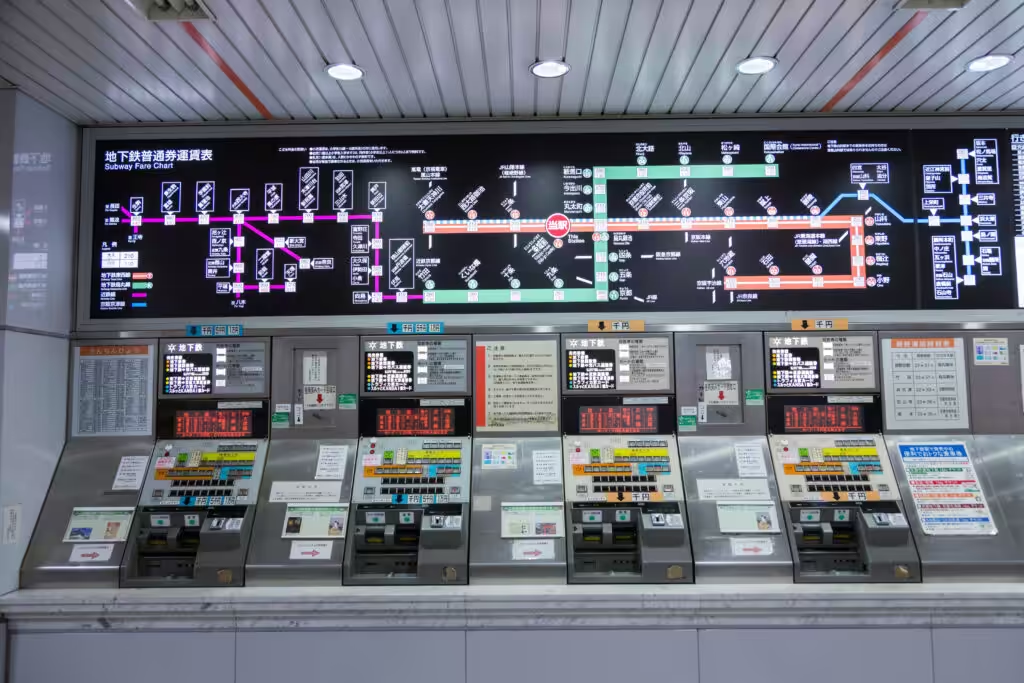
How to use Ticket Vending Machines
Ticket vending machines in Japan support multiple languages, including English, Korean, and Chinese.
Steps to Purchase a Basic Fare Ticket
- Select Language: Touch the screen and choose English.
- Choose Destination:
- Find your destination on the route map
- Check the fare
- Select Quantity: Enter the number of adult/child tickets
- Payment: Pay with cash or an IC card
- Receive Ticket: Collect your ticket along with any change
How to recharge an IC card
- On the vending machine, select “チャージ (Charge).“
- Place your IC card on the card reader
- Choose the amount to add (1,000 / 2,000 / 3,000 / 5,000 / 10,000 yen)
- Insert cash
- Confirm that the charge is complete
How to Reserve Seats
Midori-no-Madoguchi-Offline Ticket purchase
Offline tickets can be purchased in person from counters located in major JR stations.
- English-speaking staff available at major stations
- Reserved seat bookings for Shinkansen are available
- Japan Rail Pass exchange available
- Limited Express tickets can be purchased here
Online reservation
1. Ekinet (JR East):
- Tohoku / Hokuriku / Joetsu Shinkansen
- English supported
- Credit card payment available
2. Smart EX (Tokaido–Sanyo Shinkansen):
- Tokyo → Osaka → Fukuoka routes
- Can be linked with IC cards
- Offers discount services
- Kansai / Sanyo / Kyushu areas
- Supports English and Korean
Tips for reservations
- Reservations are open at 10:00 AM. Pre-booking is possible one month before the boarding date.
- Early booking is essential during peak seasons such as the New Year holidays, Golden Week, and Obon.
- For Mt. Fuji views, choose seats D and E (Tokyo → Osaka direction)
Guide to Using Japan’s Train Stations
Station Layout and How to Navigate It
Major train stations in Japan are complex but systematically designed. Although the multiple JR lines can be confusing at first, you’ll soon notice that the transfer methods and main facilities are laid out similarly across stations, making it easier to navigate as you go.
Main Facilities Inside the Station
- Ticket Gate: Enter using an IC card or paper ticket
- Platforms: Train boarding areas, identified by platform numbers
- Midori-no-Madoguchi: JR ticket office
- Ekiben Shops: Stores selling station lunch boxes
- Coin Lockers: Storage lockers for luggage
- Restrooms: Usually available both inside and outside the ticket gates
How to Transfer
- Transfers within the same railway company: Move directly between platforms without passing through the ticket gates.
- Transfers to a different railway company:
- Exit through the ticket gates once
- If using an IC card, the fare will be calculated automatically
- If a separate ticket is required, purchase a new one before re-entering
Example of a Major Station Layout
Tokyo Station
- JR Conventional Lines: Platforms 1–10
- Shinkansen: Platforms 14–23
- Marunouchi Exit: Toward the Imperial Palace area
- Yaesu Exit: Toward the business district
Shinjuku Station
- Connected to 11 lines, including JR, private railways, and subways
- The world’s busiest station, used by 3.5 million passengers per day
- With more than 200 exits, checking your exit in advance is essential
Luggage Storage (Coin Lockers, etc.)
Types of Coin Lockers & Fees
| Size | Capacity | Fee(per day) | Suitable Items |
|---|---|---|---|
| Small | ~35L | 300–400 yen (approx. $2-2.5) | Handbags, backpacks |
| Medium | 35–57L | 500–600 yen (approx. $3-4) | Small suitcases |
| Large | 57L+ | 700–800 yen (approx. $4.5-5) | Large suitcases |
How to Use
- Find an empty locker
- Place your luggage inside
- Pay with cash or an IC card
- Keep the key or receipt
- Additional charges apply if not picked up by 23:59
Alternate Services
- ecbo cloak: A Luggage storage service app that lets you store bags at cafés, hotels, etc.
- Station Luggage Delivery Service: Direct delivery to your hotel (same-day or next-day delivery options)
Things to Know and Travel Tips for Using Trains in Japan
Checking the Timetable
Japan’s trains are famous for their punctuality.
How to Check Train Schedules
- Google Maps: Provides real-time train information (most commonly used and highly accurate)
- Station Electronic Boards: Display platform numbers and departure times
- NAVITIME App: Includes delay information
Things to Keep in Mind
- Arrive at the platform at least 5 minutes before departure
- Check the last train time (usually between 23:30 and 24:30)
- Shinkansen doors close one minute before departure
Route Guide Tips
Identify Lines by Color
- Tokyo Yamanote Line: Light green
- Chuo Line: Orange
- Keihin-Tohoku Line: Light blue
Check the Direction
- In Japanese:
- 上り (のぼり, Nobori) = Toward Tokyo
- 下り (くだり, Kudari) = Toward regional/outbound areas
- Always check the platform display boards and the destination shown on the front of the train
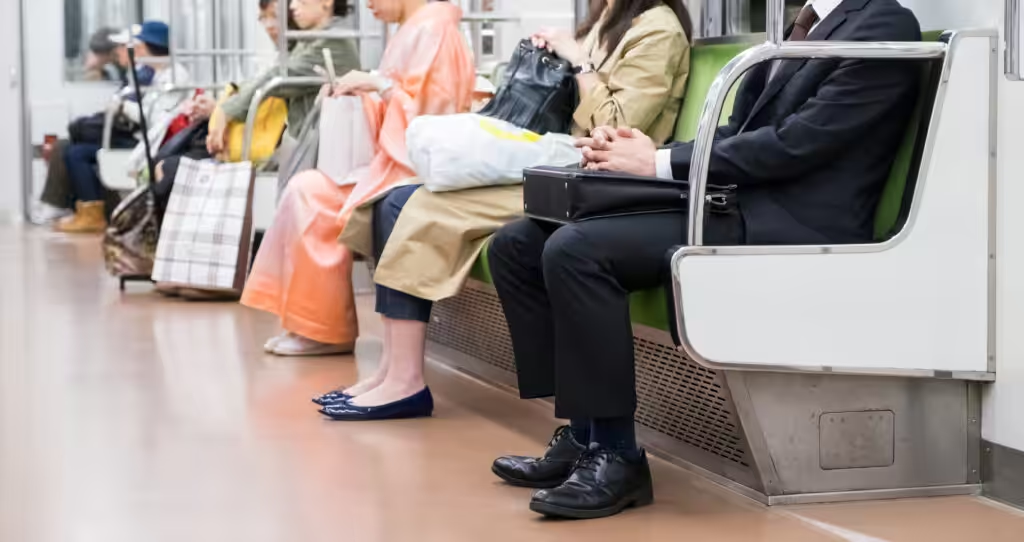
Priority Seats
- Green-colored seats are reserved for pregnant women, the elderly, and people with disabilities
Other Useful Information
Train Etiquette
- Avoid making phone calls (especially near priority seats)
- Refrain from loud conversations
- Eating is allowed only on Shinkansen and Limited Express trains
- Wear your backpack on your front or place it on the overhead rack
Oversized Luggage Reservation
For the Tokaido, Sanyo, and Kyushu Shinkansen lines, passengers carrying large luggage with a total dimension exceeding 160 cm must reserve an oversized luggage seat in advance.
- An additional 1,000 yen fee applies if you bring oversized luggage without a reservation
- How to reserve: Online or at station ticket counters
Using Wi-Fi
- Most Shinkansen and Limited Express trains offer free Wi-Fi
- Services like JR-EAST FREE Wi-Fi require a simple member registration before use
Enjoying Ekiben
- Station lunch boxes made with local specialties
- Available for purchase inside Shinkansen trains or at station shops
- Famous ekiben examples: Tomioka Ekiben (Gunma), Ikameshi (Hokkaido)
Preparing for Peak Seasons
- Golden Week (late April–early May): Japan’s longest holiday period
- Obon (mid-August): Major homecoming season
- New Year Holidays (late December–early January): During the New Year, seating reservations are required during this period
Essential Final Checklist for Train Travel in Japan
Before Departure
After Arriving in Japan
While Traveling
Conclusion: Mastering Japan’s Rail System
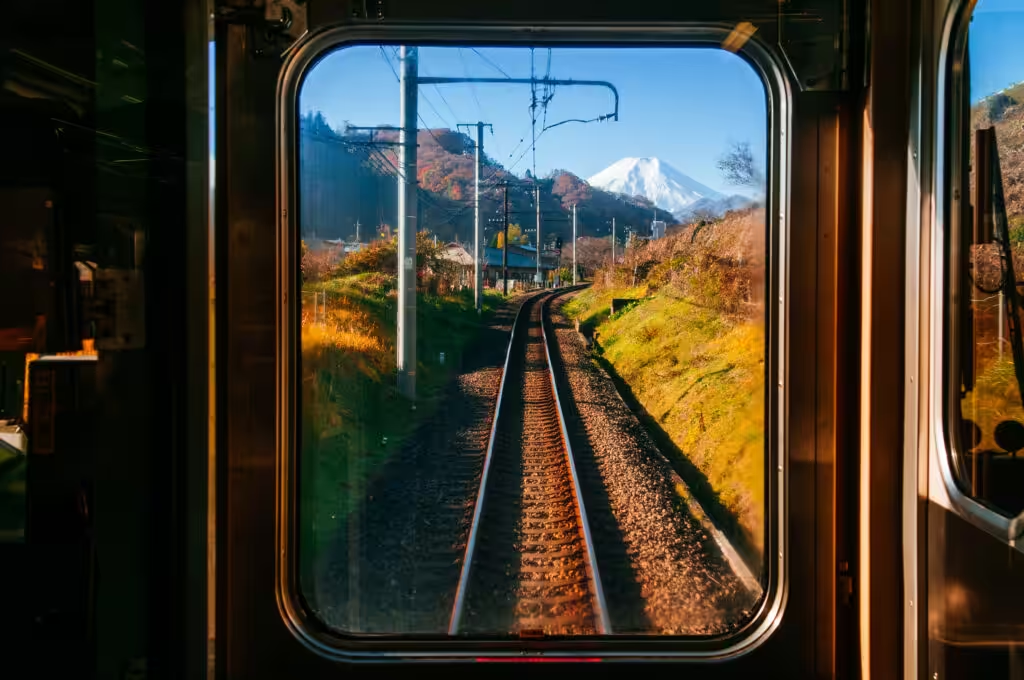
Japan’s railway system may seem complicated at first, still by reviewing and familiarizing yourself with the information in this guide, your train journey will feel much more comfortable and stress-free. As private companies operate the Japan Rail Train, you can expect precise timetables, clean facilities, and courteous service, making your train travel experience in Japan truly pleasant. As you enjoy the beautiful scenery passing by outside the train window, ESIMJAPAN.com wishes you an unforgettable train journey throughout Japan!


Leave a Reply