

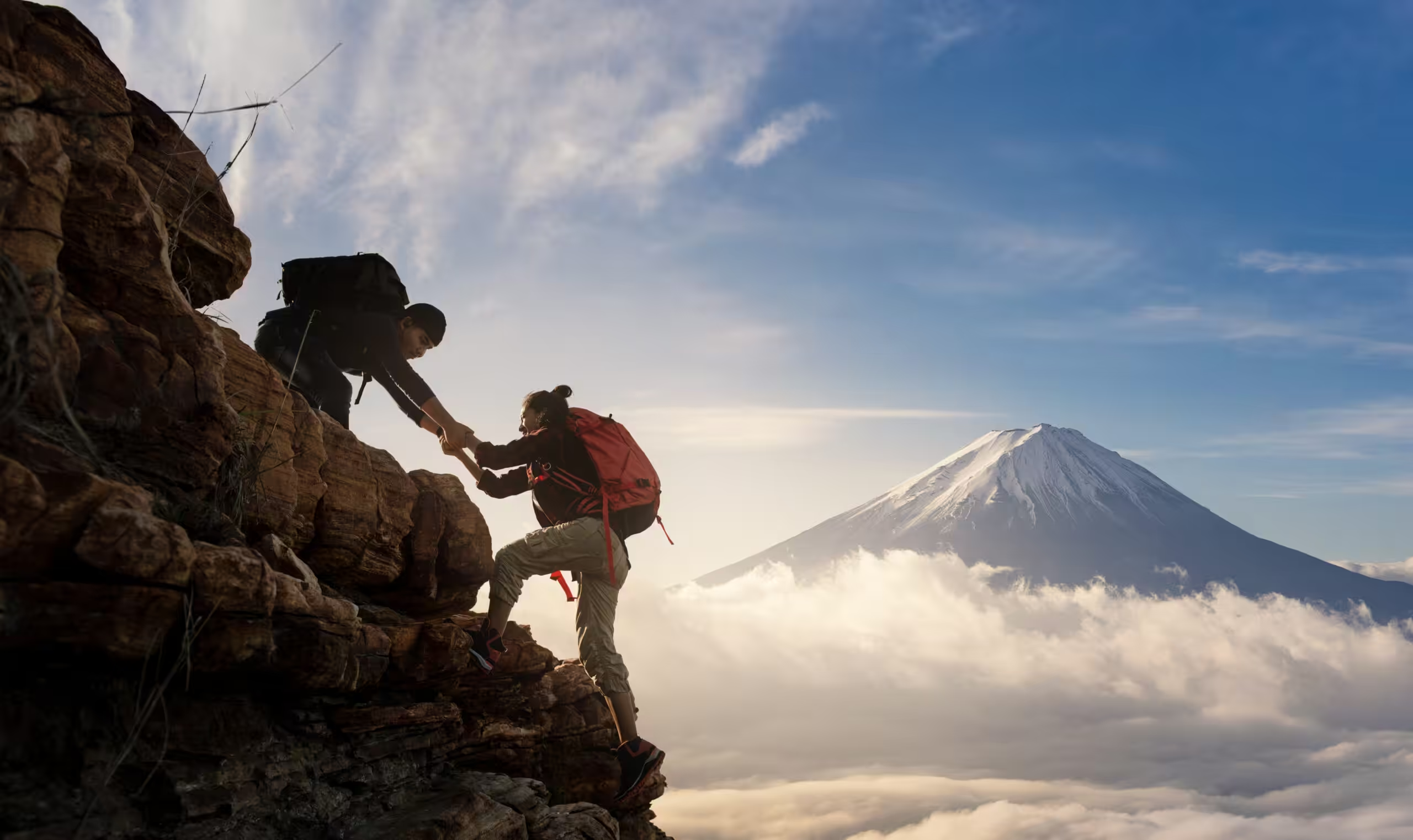
Mount Fuji, Japan’s iconic symbol and a UNESCO World Heritage site, stands at 3,776 meters and attracts over 200,000 climbers every year. However, starting in 2025, major changes have been introduced to the climbing regulations, making it impossible to enter the mountain without proper advance arrangements. As of May 9, 2025, all climbing routes, including those in Shizuoka Prefecture, require an entry fee of $25, which must be paid in advance. A mandatory reservation system has also been implemented.
Despite the new entry fee requirements, climbing Mt. Fuji remains a top attraction in 2026. Let’s discover everything you need to know about Mt. Fuji with ESIMJAPAN.com
Changes to Mt. Fuji Climbing Regulations in 2025
A climbing and entry fee of $25 per person ( the previous approx $7 contribution has been abolished)
The biggest change in Mt. Fuji climbing starting in 2025 is the mandatory entry fee. Previously, only the Yoshida Trail charged $12; however, as of May 9, 2025, a mandatory climbing fee of $25 per person will be imposed on all hiking routes.
Climbing Fee Comparison Table
| Year | Yoshida Trail | Shizuoka Trails | Notes |
|---|---|---|---|
| 2024 | $13 | Voluntary contribution of $6 | Optional donation |
| 2025 | $25 | $25 | Mandatory payment |
This climbing fee is used for environmental conservation, safety management, and facility maintenance, and must be paid during the reservation process rather than on-site.
Mandatory Online Reservation & Advance Payment (Yoshida Trail / Other 3 Trail Systems)
Starting in 2025, reservations or registrations through the online system have been made mandatory before climbing, and the online reservation system came into effect in April 2025.
Reservation system classification
Yoshida Trail (Yamanashi Prefecture)
- Reservation Website: Official Mount Fuji Climbing Reservation System
- Daily Capacity: 4,000 people (3,000 via reservation + 1,000 same-day entry)
- Advance Reservation: Strongly recommended (entry will be denied once capacity is reached)
Shizuoka Prefecture Trails (Subashiri, Gotemba, Fujinomiya)
- Reservation Method: Advance registration system
- Daily Capacity: No limit (currently)
- Requirements: Must watch the safety education video and submit a climbing plan
How to reserve
- Access the official Mount Fuji climbing website
- Select your climbing date and trail
- Enter personal information and pay the climbing fee (approx $25)
- Receive your QR code or reservation confirmation
- Present it at the gate on the day of your climb
Note: All Mount Fuji climbs for the 2025 season have ended, and you must wait until reservations for the 2026 season become available.
Daily Limit of 4,000 Climbers on the Yoshida Trail
The Yoshida Route limits the number of paying climbers to 4,000 per day, with 3,000 spots available only through reservations and 1,000 spots reserved for same-day entries, where climbers pay the fee on-site.
Yoshida Trail Reservation Strategy
- Peak Season (Late July–Mid August): Reservations may sell out immediately once the system opens, so booking at least one month in advance is essential.
- Weekends & Public Holidays: The 3,000 reservation slots sell out quickly.
- Weekdays: More availability, easier to reserve.
- Same-Day Entry: Arrive early in the morning to secure a spot from the 1,000-person quota.
Trail Gate Closure from Afternoon to Early Morning & Regulations on Bullet Climbing (Overnight Direct Ascent)
Night-climbing restrictions are one of the major policy changes in 2025. Climbers without a mountain hut reservation will be denied entry to the 5th Station from 2:00 p.m. to 3:00 a.m. the next day. On the Fujinomiya, Gotemba, and Subashiri routes as well, night climbing may be restricted between 2:00 p.m. and 3:00 a.m. for those who do not have a hut reservation.
Time-based Entry Restrictions
| Time | With the Mountain Hut reservation | Without the mountain Hut reservation |
|---|---|---|
| 05:00–14:00 | Entry allowed | Entry allowed |
| 14:00–03:00 | Entry allowed | Entry not allowed |
| 03:00–05:00 | Entry allowed | Entry allowed |
Reason for restrictions on bullet climbing
Bullet climbing refers to climbing overnight without staying in a mountain hut, to reach the summit in time for the sunrise. Since this style of climbing involves ascending at night without proper rest or sleep, the risk of injuries and illness is three times higher compared to normal climbs. Therefore, staying overnight is strongly recommended.
- Altitude sickness risk increases threefold
- High risk of hypothermia due to lowered body temperature
- Frequent falls and accidents caused by accumulated fatigue
Mount Fuji climbing season (Peak season and Off season)
Official climbing season
The official Mount Fuji climbing season in 2025 was from early July to early September. The Yoshida Route (Yamanashi Prefecture) was open from July 1 to September 10, while the Subashiri, Gotemba, and Fujinomiya routes (Shizuoka Prefecture) were open from July 10 to September 10.
2025 Climbing Season Schedule
| Trail | Opening Period | Jurisdiction |
|---|---|---|
| Yoshida | July 1 – September 10 | Yamanashi Prefecture |
| Subashiri | July 10 – September 10 | Shizuoka Prefecture |
| Gotemba | July 10 – September 10 | Shizuoka Prefecture |
| Fujinomiya | July 10 – September 10 | Shizuoka Prefecture |
Reasons Why Climbing Is Not Allowed Outside the Official Season
Outside the climbing season, mountain huts are closed, trails are not maintained, and some areas may still have snow on the ground. Weather conditions also become much more severe. In winter, Mount Fuji is a high-risk area where even professional climbers frequently face rescue incidents.
Peak Season vs. Off-Peak Season
Peak Season (Late July – Mid August)
Mount Fuji becomes most crowded after the rainy season ends in late July through August. Especially on weekends and during Obon week, trails can become extremely congested.
Characteristics of Peak Season
- Most stable weather (lower chance of rain)
- Warmer temperatures are making the climb feel easier
- Approximately 5–10°C at the summit
- Very high competition for hut reservations
- Maximum trail congestion (may require waiting in long lines to ascend)
Off-Season (Early July, Early September)
Advantages of Off-Season
- Fewer climbers, allowing a more relaxed ascent
- Mountain hut reservations are relatively easier
- More peaceful overall experience
Disadvantages of Off-season
- Lower temperatures (summit: 0–5°C)
- Higher chance of strong winds or rain
- Some mountain huts may not be operating
The Four Major Mount Fuji Trails & Course Structure
Mount Fuji has four main climbing trails, and all of them start from the 5th station (Gogome), located at an elevation of around 2,300-2400 meters. While every route begins at the 5th station, each trail offers its own unique characteristics and requires different amounts of time to complete.
Yoshida Trail
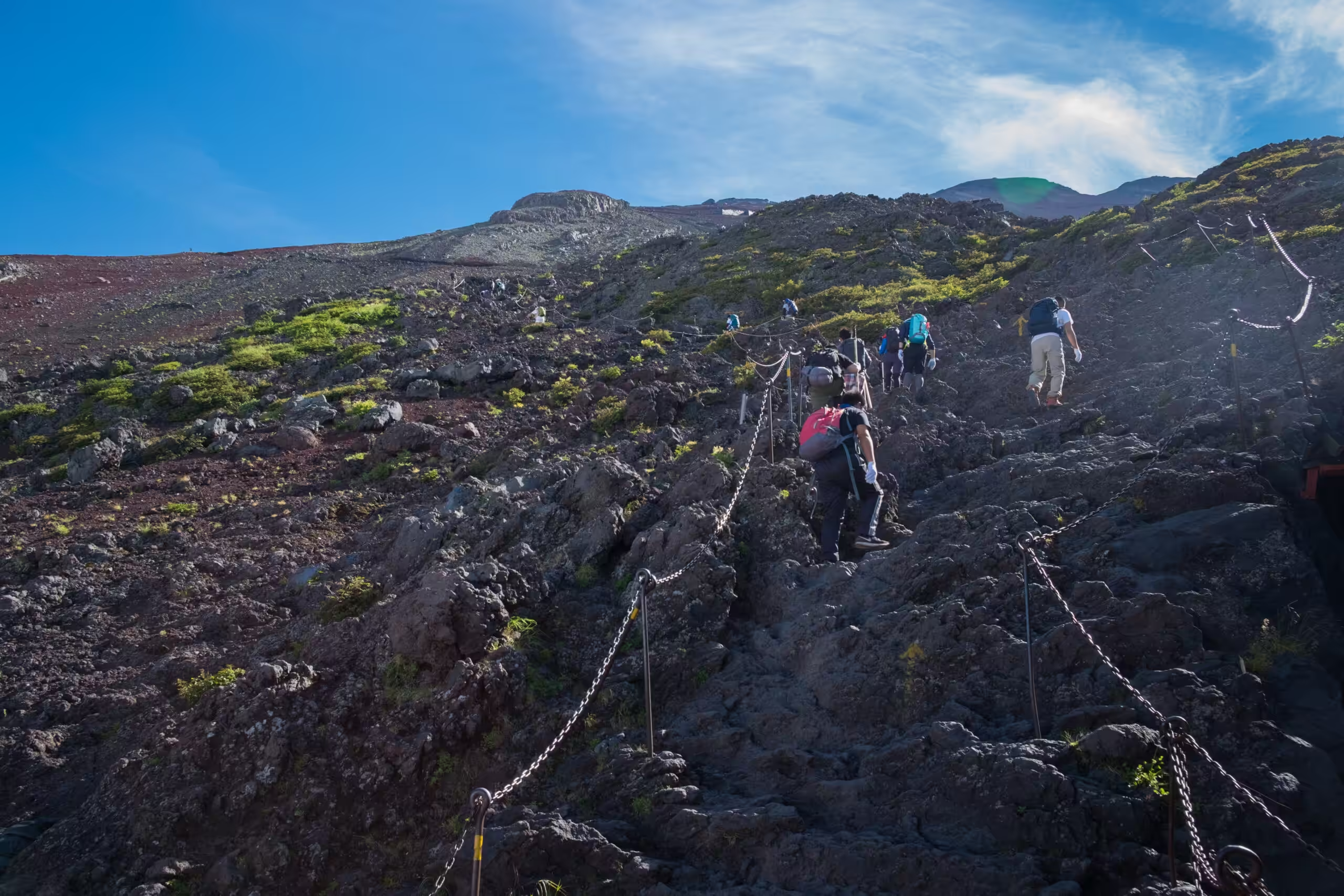
Basic Course Information
| Category | Details |
|---|---|
| Starting Point | Fuji Subaru Line 5th Station (Elevation: 2,305 m) |
| Distance | Ascent 7.5 km / Descent 7.6 km |
| Estimated Time | Ascent ~6 hours / Descent ~3 hours |
| Elevation Gain | Approx. 1,471 m |
| Difficulty | ★★★☆☆ (Beginner-friendly) |
| Number of Mountain Huts | 18 (the most among all routes) |
Highlights of Yoshida Trail
The Yoshida is the most popular and beginner-friendly trail. It offers the most mountain huts and facilities, including toilets, but it can get very crowded due to high demand.
Advantages
- A good range of amenities, including 18 huts and many toilets.
- Separate ascent and descent trails for a safer hiking experience.
- Convenient access from Tokyo, with direct buses from Shinjuku.
- Gentle slopes suitable for first-time climbers.
Disadvantages
- Extremely crowded during peak seasons (long lines on the trail).
- Daily limit of 4,000 climbers with reservations required.
- Hard to maintain a personal pace due to the crowd.
Best for: First-time Fuji climbers, those who prioritize safety, and those who require ample facilities.
Subashiri Trail
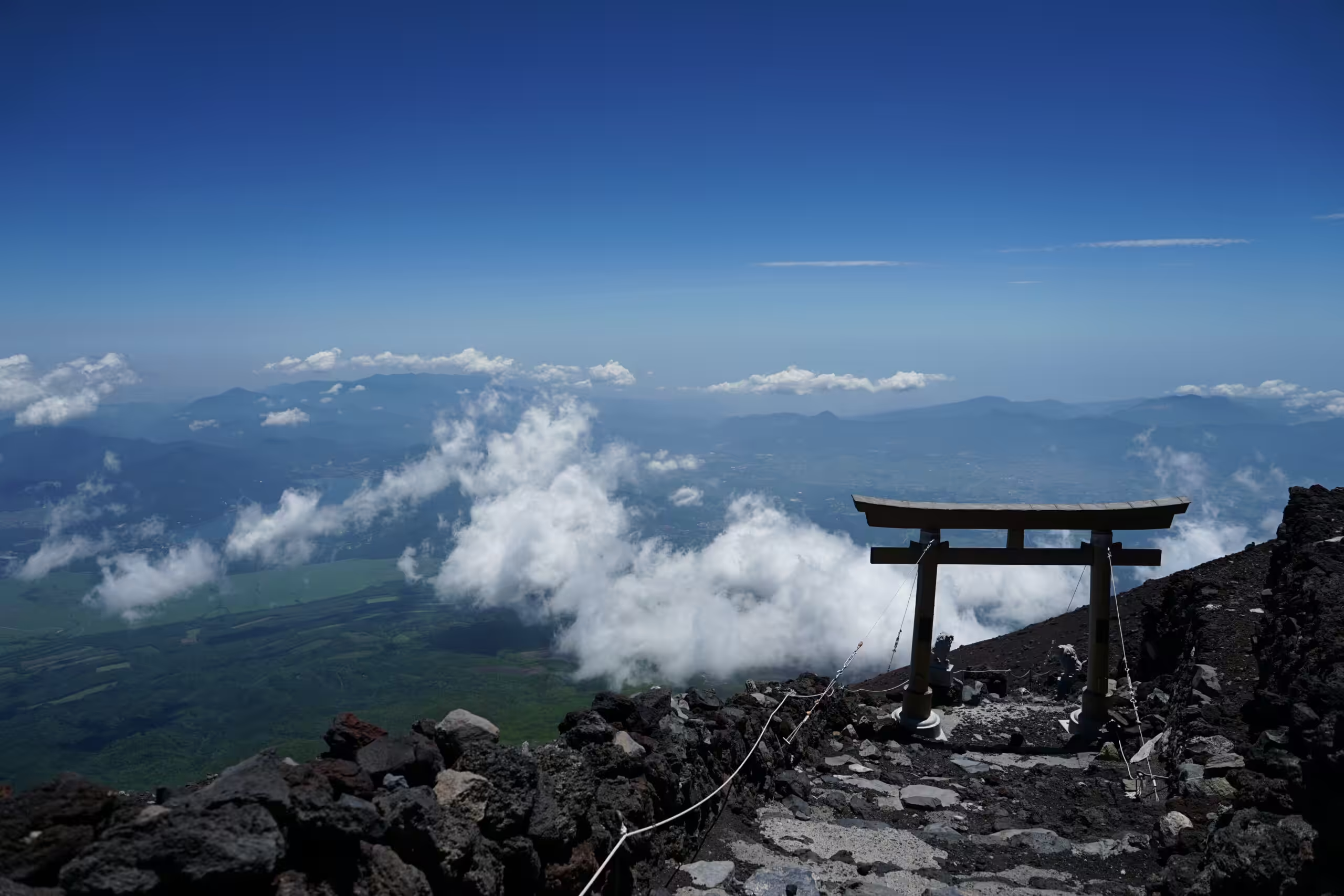
Basic Course Information
| Category | Details |
|---|---|
| Starting Point | Subashiriguchi 5th Station (Elevation: 1,970 m) |
| Distance | Ascent 6.9 km / Descent 6.2 km |
| Estimated Time | Ascent ~6 hours / Descent ~3 hours |
| Elevation Gain | Approx. 1,806 m |
| Difficulty | ★★★☆☆ |
| Number of Mountain Huts | 8 |
Highlights of Subashiri Trail
The trail begins with a gentle forest path but becomes steeper after merging with the Yoshida Route in the mid-to-upper sections.
Advantages
- Beautiful views along the early forested section
- The sandy descent trail allows for a faster descent
- Relatively quite
Disadvantages
- Congestion increases after merging with the Yoshida Trail at the 8th Station
- Risk of confusing the route with the Yoshida Trail during descent
- Fewer mountain huts are available
Best for: Hikers who value scenic routes and have moderate fitness.
Gotemba Trail
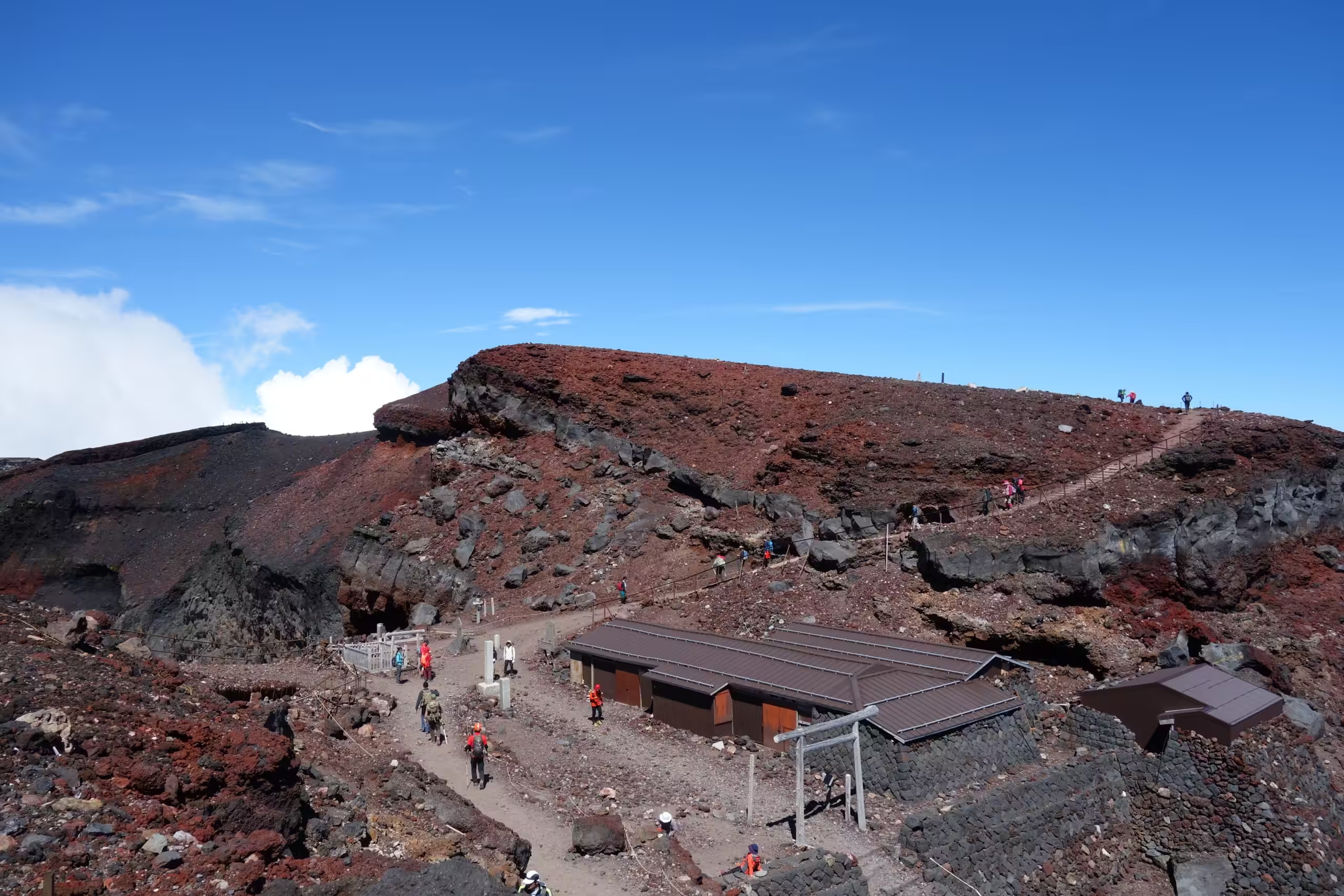
Basic Course Information
| Category | Details |
|---|---|
| Starting Point | Gotembaguchi New 5th Station (Elevation: 1,440 m) |
| Distance | Ascent 11.0 km / Descent 8.5 km |
| Estimated Time | Ascent ~8 hours / Descent ~3.5 hours |
| Elevation Gain | Approx. 2,336 m (the largest) |
| Difficulty | ★★★★★ (Advanced) |
| Number of Mountain Huts | 4 (the fewest) |
Highlights of Gotemba Trail
The Gotemba Trail on Mount Fuji offers a peaceful climb with the fewest crowds, featuring a long, gentle ascent starting at a low altitude, limited facilities until higher stations, and a thrilling descent on soft volcanic gravel known as the “Great Sand Run.” It is ideal for experienced hikers seeking a challenging and scenic route with expansive views and a unique natural experience.
Advantages
- The Least Crowded routes with fewer climbers
- Sandy Osunabashiri’s descent allows for a very swift descent
- An authentic climbing experience
Disadvantages
- Lowest starting elevation, making it the longest route
- Fewest mountain huts and toilet facilities
- Extremely physically demanding
- Higher risk of altitude sickness
Best for: Experienced hikers and those who prefer a quiet and solitary climb.
Fujinomiya Trail
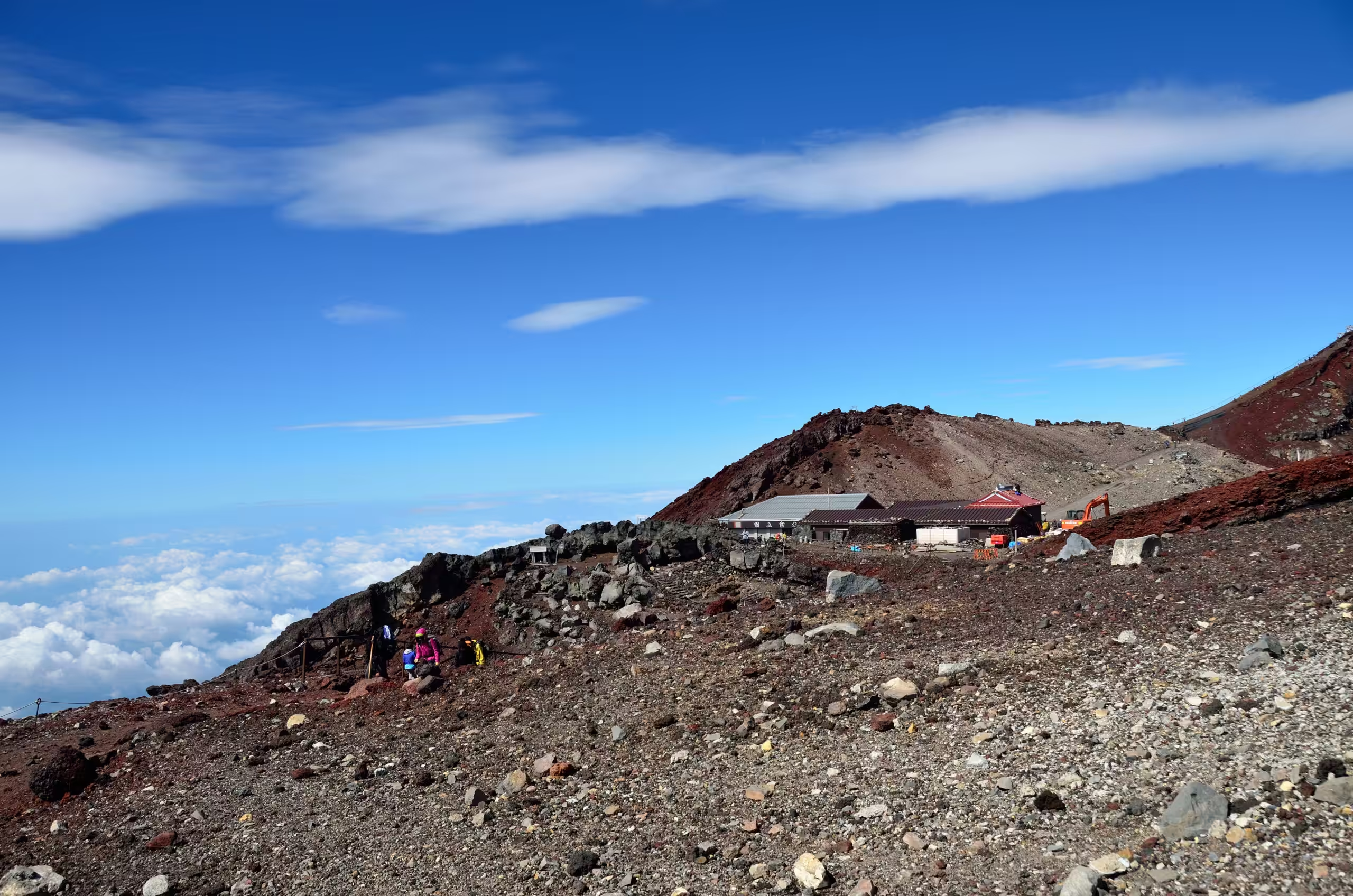
Basic Course Information
| Category | Details |
|---|---|
| Starting Point | Fujinomiyaguchi 5th Station (Elevation: 2,400 m) |
| Distance | Ascent 5.0 km / Descent 5.0 km |
| Estimated Time | Ascent ~5 hours / Descent ~3 hours |
| Elevation Gain | Approx. 1,376 m (the smallest) |
| Difficulty | ★★★★☆ |
| Number of Mountain Huts | 8 |
Highlights of Fujinomiya Trail
The Fujinomiya Trail is the shortest and steepest route to Mount Fuji’s summit, starting at the highest trailhead and offering direct access to Mount Hoei and the summit with well-equipped facilities along the way.
Advantages
- Shortest overall route
- The shortest distance to the summit
- Highest starting elevation among all trails
Disadvantages
- Steeper slopes throughout the course
- Ascent and descent share the same trail (can be crowded)
- Higher risk of falling rocks
Best for: Those seeking the fastest route to the summit and beginners with good physical fitness.
Source: WILLER Mount Fuji Tour
Mount Fuji Climbing Essentials & Gear Checklist
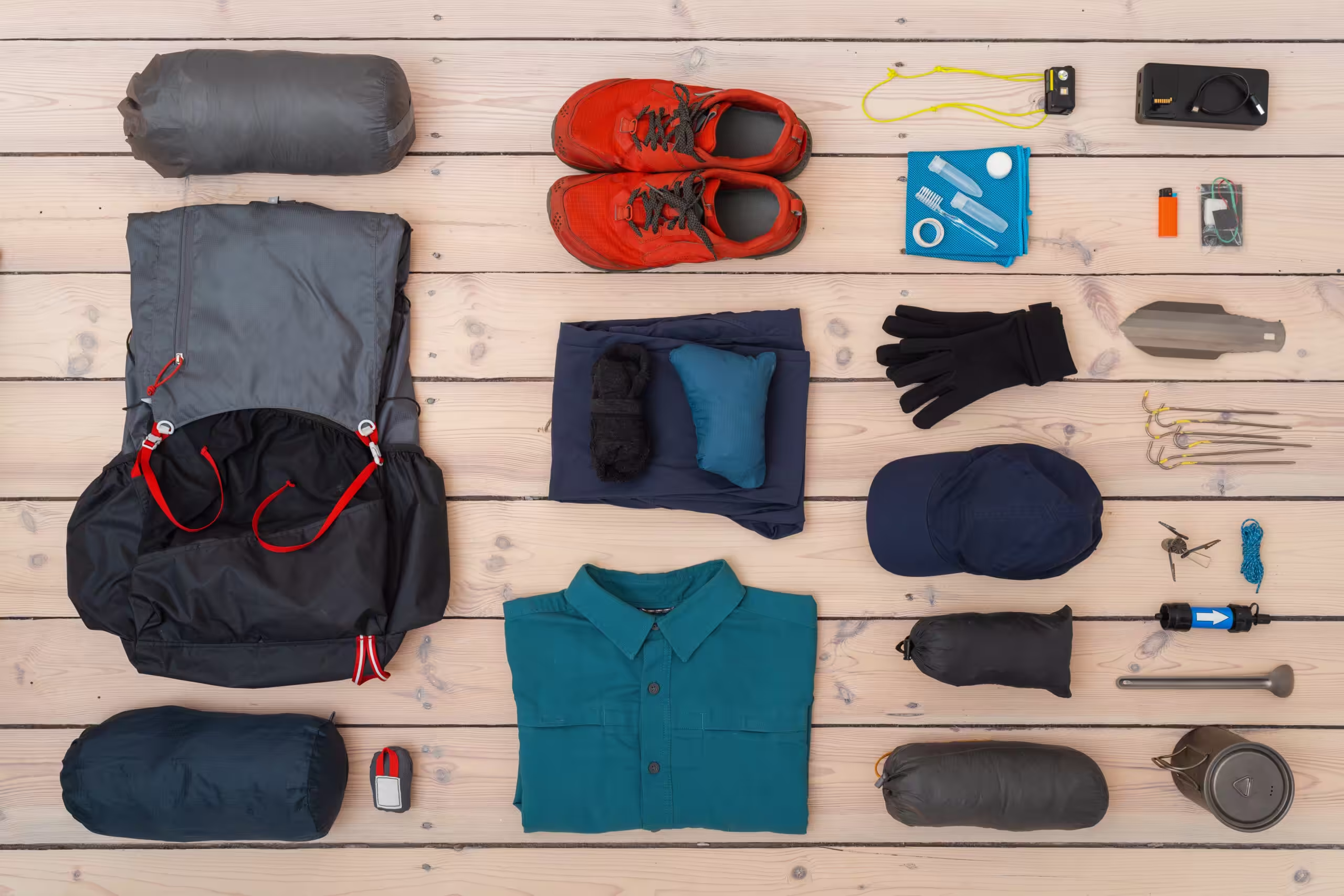
Mount Fuji is a high-altitude mountain where summit temperatures can drop to 0–5°C even in midsummer. Warm clothing is essential (it often falls below 0°C at the summit, even during summer). Be sure to bring a two-piece waterproof hiking rain suit, a headlamp, and plenty of drinking water.
Essential Clothing & Gear for Climbing Mount Fuji
| Items | Description | Notes |
|---|---|---|
| Hiking Boots | Waterproof, ankle support, slip-resistant | Choose lightweight, durable boots that cover the ankles. Avoid wearing sandals, as they can allow small rocks to enter and increase the risk of injury. |
| Warm clothing | Down jacket, fleece | Necessary for summit temperatures of 0–5°C. |
| Rainwear | Two-piece waterproof jacket & pants | Gore-Tex or similar waterproof/breathable material recommended. |
| Hiking Pants | Quick-dry, stretchy material | Avoid cotton. |
| Thermal Base Layer | Moisture-wicking innerwear | Essential for proper layering. |
| Gloves | Waterproof and insulated | Bring an extra pair as backup. |
| Hat | Knit hat that covers the ears | Provides both warmth and UV protection. |
Safety Equipment
| Item | Description |
|---|---|
| Headlamp | There is no lighting on Mount Fuji’s trails. Climbing at night without proper illumination is extremely dangerous because you cannot clearly see where you are stepping. |
| Climbing Helmet | Protects against falling rocks (helmets can be rented with a $13 deposit on the Yoshida Trail). |
| Sunglasses | Protects your eyes from UV rays and prevents the skin around your eyes from darkening due to melanin production caused by ultraviolet exposure. |
| Sunscreen | SPF 50+ recommended; reapply every 3–4 hours. |
Backpack & Personal Items
| Item | Description |
|---|---|
| Hiking Backpack | A vertically shaped hiking backpack is recommended. Capacity: 25–30L. |
| Water | Prepare about 1 liter of water when starting your hike. For an overnight climb (1 night, 2 days), you will need approximately 2 to 3 liters in total. |
| Snacks(Trail Food) | Chocolate, nuts, energy bars. |
| Cash | Cash is needed for buying water, snacks, oxygen cans, or using paid toilets. It’s helpful to carry about twenty 100-yen coins (approx $13) plus an additional $20. |
| First Aid Kit | Pain relievers, altitude sickness medication, and bandages. |
| Trash Bag | Required to carry all your trash back down the mountain. |
Paid Toilets on Mount Fuji
All toilets on Mount Fuji are paid facilities.
- Fee per use: 200–300 yen (Approx $1-2)
- Estimated total cost: 1,200–1,500 yen (Approx $8-10) for a 1-night, 2-day climb
- Important: Bring at least twenty 100-yen coins (approx $13).
Essential Items Costs in Mountain Huts
Because supplies must be transported up the mountain, items sold at the huts are significantly more expensive.
| Item | 5th Station Price | Mountain Hut Price |
|---|---|---|
| Bottled water (500ml) | 150yen (approx $1) | 400–500 yen (approx $2-3.5) |
| Cup Ramen | 200yen (approx $1.5) | 500–700 yen (approx $3.5-4.5) |
| Hand warmers | 100yen (approx $0.5) | 300 yen (approx $2) |
How to Get to Mount Fuji & Transportation Options
From Tokyo to the 5th station
Shinjuku → Yoshida 5th Station (Direct Bus)
You can take the express bus from the Busta Shinjuku (Shinjuku Expressway Bus Terminal) to the Yoshida 5th Station. This direct bus operates only during the summer climbing season and runs from central Tokyo (Shinjuku) straight to the Yoshida-guchi 5th Station.
Direct Bus Information
| Category | Details |
|---|---|
| Departure Point | Busta Shinjuku (South Exit of Shinjuku Station) |
| Arrival Point | Fuji Subaru Line 5th Station |
| Travel Time | Approximately 2 hours and 30 minutes |
| Operating Period | Early July – Late August (climbing season only) |
| Fare | One-way approx. $18/ Round trip approx. $30 |
| First Bus | 06:45 |
| Last Bus (return from 5th station) | 17:00 |
| Reservation | Highway-buses.jp |
Note: The last bus from the 5th Station to Shinjuku departs at 5:00 p.m. This can be quite tight for beginners, so be sure to plan your climb carefully.
Shinjuku → Kawaguchiko Station → 5th Station (Transfer Required)
This route is recommended if you’re traveling outside the peak climbing season or if you prefer a more flexible schedule.
Step 1: Shinjuku → Kawaguchiko Station
- Express Bus: About 1 hour 50 minutes, 2,000 yen (approx $12)
- Fujikyu Railway: About 2 hours, 2,500 yen (approx $16)
Step 2: Kawaguchiko Station → 5th Station
- Climbing Shuttle Bus: About 50 minutes, 1,570 yen (approx $10) for a single trip, and for a round trip, 2,300 yen (approx $16)
- Operating Hours: First bus 05:00 / Last bus 20:00 (more flexible return times for descent)
Access to the Shizuoka Prefecture Trails
| Trail | Main Stations | Bus Route |
|---|---|---|
| Fujinomiya | JR Fujinomiya Station, Shin-Fuji Station | Bus to Fujinomiya 5th Station (approx. 2 hours) |
| Gotemba | JR Gotemba Station | Bus to Gotemba New 5th Station (approx. 1 hour) |
| Subashiri | JR Gotemba Station, Shin-Matsuda Station | Bus to Subashiri 5th Station (approx. 1 hour 10 minutes) |
Private Car Restrictions
During the official climbing season (except for the Gotemba Route), the parking lots at the 5th Stations quickly become full. When private car restrictions are in place, you must park your car at a paid parking lot at the foot of the mountain and transfer to a paid shuttle bus or taxi to reach the 5th Station.
Restriction Period: Mid-July to late August (especially weekends and public holidays)
Alternative Options
- Use a park-and-ride parking lot at the foot of the mountain (approx.$6 per day)
- Transfer to a shuttle bus (round trip approx $15)
Final Preparation Checklist
1 Month Before Your Hike
□ Complete online reservation (especially for the Yoshida Trail)
□ Book your mountain hut accommodation (each hut requires an individual reservation)
□ Purchase or reserve rental for hiking boots and gear
□ Begin physical training (climb stairs 2–3 times a week)
1 Week Before Your Hike
□ Check the weather forecast (be prepared for sudden changes)
□ Inspect your gear (especially waterproof and thermal items)
□ Prepare 100-yen coins (at least 20)
□ Get altitude sickness medication prescribed (if needed)
On the Day of Your Climb
□ Print or save your reservation QR code
□ Submit your climbing registration (can be done online)
□ Get sufficient sleep (at least 7 hours)
□ Check the weather one last time before departure
After Descending
□ Make sure you have collected and carried out all your trash
□ Return any items rented from the mountain hut
□ Check the bus schedule for your return trip
Prepare for a Safe 2026 Mount Fuji Climb with ESIMJAPAN.com
The 2025 Mount Fuji climbing season has officially ended, so the mountain cannot be climbed for now. However, by understanding the updated rules for the 2026 season and choosing the route that best suits your ability, you can look forward to a safer and more enjoyable ascent. When planning your trip, ensure you stay connected on the mountain and throughout Japan with reliable data from ESIMJAPAN.com, your travel companion for a smooth and worry-free adventure.


Leave a Reply